
The arrival of a new litter of puppies is one of the most exciting moments any dog owner or breeder can experience. Yet, behind that excitement lies a journey that spans roughly nine weeks, packed with rapid physical changes, hormonal shifts, and critical milestones that every caring pet owner should understand. Knowing what is happening inside a pregnant dog at each stage of gestation is not just fascinating it is essential to ensuring both the mother and her puppies remain safe and healthy throughout the entire process.
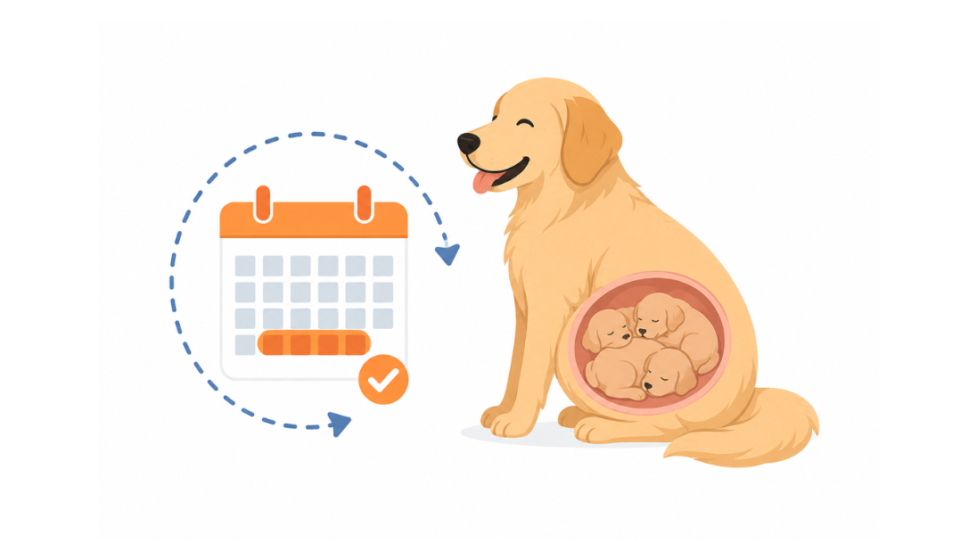
The average gestation period for dogs is about 63 days, or approximately nine weeks, starting from the day of ovulation. However, the full range can vary from 58 to 68 days, depending on factors such as the breed, size, and timing of fertilization. This window may seem short compared to human pregnancy, but within those nine weeks, a dog’s body goes through extraordinary developmental phases. The embryos travel, implant, grow organs, form bones, and prepare for life outside the womb all within a span that most people associate with completing a single school semester.
What makes canine pregnancy even more layered is the fact that confirming a pregnancy and tracking its timeline is not always as straightforward as it seems. Sperm can remain viable inside a female for several days, and eggs can stay fertile for up to 48 hours after ovulation, meaning the exact start date of gestation can be difficult to pin down without professional veterinary guidance. Knowing the due date is important for the health of the pregnant dog and the puppies and is used by the breeder to adapt changing nutritional demands and schedule veterinary care during pregnancy. Understanding the full arc of a dog’s pregnancy from the silent first week to the dramatic final days before whelping sets every pet owner up for a more confident and compassionate caregiving experience.
The Canine Heat Cycle and How Pregnancy Begins
Before diving into the gestation period itself, it helps to understand how a dog becomes pregnant in the first place. Female dogs do not have menstrual cycles like humans, but they do have heat cycles where they produce discharge similar to human menstruation. According to the American Kennel Club, a female dog goes into heat once every six months or so. The full heat cycle lasts somewhere between 18 to 21 days on average, and it is broken into four stages: proestrus, estrus, diestrus, and anestrus.
The estrus stage is when ovulation occurs. During this stage, which usually lasts around 10 to 14 days, the vulva will be soft and swollen. The discharge will slow and be lighter in color. The dog will be receptive to males during this time and may show behavioral changes such as moving her tail to one side.
Most dogs begin coming into season between 6 to 18 months of age. A female dog can become pregnant as early as this first cycle. However, responsible breeders carefully plan the timing of breeding, often using hormone testing to identify the ideal moment of ovulation rather than relying solely on mating behavior.
How Long Are Dogs Pregnant?
A normal dog gestation period is 63 to 65 days, regardless of the size or breed of the dog. For example, a Chihuahua is pregnant for the same amount of time as a Rottweiler. Though how long dogs are pregnant is shorter than humans, like humans, dogs also have three trimesters, each lasting about 21 days.
The normal gestation period in dogs is approximately 63 days as measured from ovulation, although this can vary slightly by several days. The due date is 65 to 66 days from the LH surge, 63 days on average from ovulation, and 58 to 72 days from the first time the dog allowed breeding. Because the range is wide when measured from the breeding date alone, veterinary hormone testing is often the most reliable way to narrow down the expected delivery window.
Key Facts About Dog Gestation
- Average gestation period: 63 days from ovulation
- Full range: 57 to 72 days
- Number of trimesters: Three, each lasting approximately 21 days
- Duration compared to humans: Roughly one tenth as long
- Dogs with small litters tend to have longer pregnancies. A litter with two or fewer puppies will gestate approximately two and a half days longer than a litter of ten or more puppies.
The Three Trimesters of Dog Pregnancy
First Trimester: Weeks 1 to 3
During the first trimester of a dog’s gestation period, her appearance will not usually change, aside from gaining a small amount of weight. A few dogs may develop signs of morning sickness during week three or four, but it is usually not as severe as in humans, and it may not be noticeable at all.
Internally, however, a great deal is happening. During the first month, the embryos travel to the uterine horns and are embedded in the uterine lining. The fetus begins to take shape by day 22, and by day 26 or 28 the veterinarian should be able to detect fetal heartbeats on an ultrasound.
Second Trimester: Weeks 4 to 6
You may notice changes in appetite or abdominal swelling, especially toward the end of the second trimester. The nipples begin to enlarge and may darken slightly as the body prepares for nursing. Around week four, a veterinarian can confirm the pregnancy using an ultrasound, which can also provide an estimated puppy count.
Weeks 5 and 6 mark significant growth for the puppies. Their organs develop rapidly, and they start to resemble tiny puppies. By the end of week 6, the fetuses will have distinct features like toes, claws, and whisker buds. The dog’s abdomen will start to enlarge noticeably, and appetite will increase significantly.
Third Trimester: Weeks 7 to 9
During the last trimester, the fetuses experience the most rapid period of growth. The dog’s belly will grow visibly larger, her appetite will spike, and behavioral changes become far more pronounced. The beginning of the third trimester, around day 45, is when the puppies can be seen on an X-ray. A veterinarian will be able to see how many puppies the dog is carrying and ensure that the puppies’ heads will pass safely through the birth canal.
By the seventh week, the dog’s gestation period is nearing its end. The dog may become more restless and begin to seek out secluded spots where she can give birth. As the eighth week approaches, birth is imminent. The dog may seem more tired and spend more time resting. The puppies are now fully developed, and movement in the dog’s abdomen may even be visible.
Week by Week Dog Pregnancy Timeline
| Week | Days | Key Developments |
|---|---|---|
| Week 1 | Days 1 to 7 | Fertilization and early cell division; no outward signs |
| Week 2 | Days 8 to 14 | Embryos travel to the uterine horns |
| Week 3 | Days 15 to 21 | Embryos implant; mild nausea or appetite changes possible |
| Week 4 | Days 22 to 28 | Fetal heartbeats detectable by ultrasound; nipple changes begin |
| Week 5 | Days 29 to 35 | Rapid organ development; abdomen starts to expand |
| Week 6 | Days 36 to 42 | Fetuses develop toes, claws, whisker buds; appetite increases significantly |
| Week 7 | Days 43 to 49 | Puppy bones mineralizing; X-ray can confirm litter count |
| Week 8 | Days 50 to 56 | Puppies fully developed; mother becomes restless; nesting begins |
| Week 9 | Days 57 to 63+ | Labor imminent; temperature drops; whelping begins |
Signs of Dog Pregnancy to Watch For
Many dog owners first suspect pregnancy through behavioral and physical changes. The earliest signs of pregnancy in dogs include changes in appetite, lethargy, and behavioral changes, such as increased affection or nesting behavior. These signs can be subtle, so missing them early on is not unusual.
As pregnancy advances, more visible symptoms emerge:
Signs that may appear in early to mid pregnancy include nausea and vomiting resembling morning sickness, an increase in appetite if the dog does not feel sick, slightly enlarged nipples, clear vaginal discharge, and decreased physical activity with more time spent sleeping.
By the third trimester, the pregnant dog’s belly will become larger during this period and may sway gently back and forth beneath her as she walks. Her mammary chain will swell, and she may leak milk from her nipples. The dog will likely have a bigger appetite than usual, one that then slows down as she gets closer to delivery.
How Vets Confirm Dog Pregnancy
An abdominal ultrasound is the most reliable way to diagnose and check pregnancy. During an ultrasound, the veterinarian can see the developing embryos at around three weeks after breeding. They can watch the embryos for proper development and get an exact count of puppies to expect.
At about 20 to 30 days, a veterinarian can detect pregnancy by palpating along a dog’s abdomen to test for swelling. Additionally, ultrasound can generally see a fetus at about 16 to 20 days after gestation.
A blood test measuring the hormone relaxin, which is produced by the placenta, can also confirm pregnancy. A relaxin test, a blood test that can be useful in evaluating whether a dog is pregnant at the time of the test, is performed approximately 27 to 30 days after breeding. After day 45, X-rays become particularly useful as puppy skeletons become visible, giving the most accurate puppy count before delivery.
Factors That Affect Pregnancy Length
While the 63-day average applies broadly across breeds, several variables can push the timeline slightly shorter or longer.
Litter size plays a significant role. Larger litters often result in slightly shorter pregnancies, while smaller litters may extend the gestation period by a few days. The age and health of the mother also impact pregnancy duration, with first-time mothers sometimes carrying puppies a day or two longer than experienced mothers.
Environmental factors, stress levels, and the mother’s overall health condition also contribute to variations in the canine gestation period. Breed characteristics, particularly in brachycephalic breeds like French Bulldogs and English Bulldogs, can also influence delivery timing and method, with many requiring planned cesarean sections due to the structure of their birth canals.
Nutrition and Care During Dog Pregnancy
Proper nutrition during each stage of pregnancy directly impacts the health of both the mother and her developing puppies. During the first two trimesters of pregnancy, a pregnant dog can be fed a normal adult diet. Weight and body condition should be monitored, increasing food if any weight loss is noticed. After around 40 days of pregnancy, once the dog enters her last trimester, the mom-to-be may need calorie intake increased by 25 to 50 percent. Switching a pregnant dog to a growth or puppy diet during the last trimester is recommended.
Nutrients like calcium, phosphorus, and magnesium are particularly important for unborn puppies. For the first two-thirds of pregnancy, the dog will eat roughly the same amount of food as usual. Between the 35th and 40th day, the dog will get much hungrier to account for growing energy needs. During the last trimester, the puppies will take up more space in the dog’s abdomen, so the stomach does not have as much room to expand. To compensate, the dog may prefer eating several small meals throughout the day instead of a few large ones.
Exercise should also be gradually reduced as the pregnancy progresses. Gentle walks remain beneficial through most of the pregnancy, but strenuous activity should be avoided, especially in the third trimester when the risk of strain increases.
Preparing for Whelping: What to Set Up
As the due date nears, preparation makes the birthing process smoother for everyone. Introducing a whelping box one to two weeks before the expected delivery date is recommended. A quiet, warm location away from household traffic is ideal. The box should be large enough for the dog to lie comfortably but have sides high enough to contain the newborn puppies. Lining the box with clean towels or blankets that can be easily washed is a practical approach. Allowing the dog to spend time in the box before labor so she feels comfortable there is important.
Behavior changes in the dog, such as extreme nesting behavior, discomfort, and increased panting, usually occur 6 to 12 hours before labor begins but may last up to 24 to 36 hours. Rectal temperature transiently decreases within 24 hours of labor to below 99 degrees Fahrenheit, compared to the normal range of 100 to 102.5 degrees Fahrenheit.
Loss of appetite is common within 24 hours of delivery. Vaginal discharge that is clear or slightly bloody indicates that labor is beginning. Knowing these signs in advance allows pet owners to stay calm, stay prepared, and reach out to a veterinarian at the right moment if complications arise.
When to Contact a Veterinarian
Most dogs go through labor without needing significant intervention, but certain warning signs should prompt an immediate call to a veterinarian. Signs of concern include if the dog has been straining for 30 minutes or more without delivering a puppy, if the mother seems to be in pain or distress, or if there is a longer gap than expected between puppies.
Canine dystocia, or difficulty during birth, is estimated to occur in less than 5 percent of deliveries, although research suggests it may be considerably higher in certain breeds such as the Chihuahua, Pug, Boston Terrier, and French Bulldog. Having a plan in place with a trusted veterinarian well before the due date is always the safest approach.
The Final Chapter: Welcoming the New Litter
The postpartum period deserves as much attention as the pregnancy itself. After delivery, the dog will need rest, nourishment, and a quiet space to bond with her newborns. The first few weeks postpartum are just as important as the pregnancy. During this time, focus should be on maintaining a clean, calm environment and watching for any signs of complications. The dog should have constant access to fresh water and high-quality food formulated for nursing mothers.
A female dog’s highest energy needs will be after she gives birth, when she is making milk for the puppies. Supporting her through this phase with proper nutrition, limited stress, and regular veterinary check-ins ensures the best possible start for every puppy in the litter.
A dog’s pregnancy spans just about nine weeks, yet it encompasses an entire universe of biological complexity, emotional shifts, and physical transformation. For anyone caring for a pregnant dog, understanding this journey from ovulation to whelping is both a responsibility and a privilege. Every meal offered, every check-in with the veterinarian, and every soft blanket placed in the whelping box is a small act of love that contributes to a healthier, safer outcome for a new generation of lives just beginning to find their footing in the world.
Frequently Asked Questions (FAQs)
1. How long are dogs pregnant on average?
Dogs are pregnant for an average of 63 days from the date of ovulation, which works out to approximately nine weeks or just over two months. The range can vary from 57 to 72 days depending on the timing of fertilization and other factors.
2. Do all dog breeds have the same gestation period?
Yes, the core gestation period of approximately 63 days is consistent across breeds. A Chihuahua and a Great Dane have essentially the same pregnancy duration, though minor variations of a day or two can occur based on litter size, health, and individual biology.
3. How can someone tell if a dog is pregnant without a vet?
Early signs include reduced appetite, mild nausea, increased tiredness, and subtle nipple enlargement. However, these signs can be easy to miss or confuse with other conditions. Veterinary confirmation through ultrasound, palpation, or a blood relaxin test is the most reliable approach.
4. When can a vet confirm dog pregnancy?
A veterinarian can perform an ultrasound to detect embryos at approximately 16 to 20 days after ovulation. Palpation of the abdomen can detect swelling between days 20 and 30, and a relaxin blood test is effective around 27 to 30 days after breeding.
5. How many puppies can a dog have in one litter?
Litter size varies widely by breed, age, and health. Small breeds typically have fewer puppies, often one to four, while larger breeds can have anywhere from six to twelve or more. Genetics and the health of both parents also play a role.
6. Can a dog be pregnant by more than one male at the same time?
Yes. During a dog’s heat cycle, she can mate with more than one male, and puppies from the same litter can have different fathers. This is possible because the estrus stage can last several days, during which multiple matings can occur.
7. What should a pregnant dog eat during gestation?
For the first two trimesters, a regular high-quality adult diet is generally sufficient. In the third trimester, food intake should increase by 25 to 50 percent. Many veterinarians recommend switching to a puppy or growth formula diet during this final phase to meet the higher nutritional demands.
8. What is a whelping box and when should it be set up?
A whelping box is a designated area where a dog gives birth and nurses her puppies. It should be clean, warm, quiet, and lined with soft washable bedding. Setting it up one to two weeks before the due date gives the mother time to get comfortable with the space before labor begins.
9. What are the signs that a dog is about to go into labor?
Common signs include a drop in body temperature below 99 degrees Fahrenheit, restlessness, nesting behavior, loss of appetite, excessive panting, and clear or slightly bloody vaginal discharge. These signs typically appear 12 to 24 hours before active labor begins.
10. Is it normal for a dog’s pregnancy to last longer than 65 days?
A pregnancy extending a few days beyond 65 days is not always cause for alarm, especially if the breeding date was estimated rather than confirmed through ovulation testing. However, any pregnancy extending beyond 70 days should prompt a veterinary evaluation to rule out complications.