
As June approaches and temperatures begin their sharp, relentless climb, the danger building in backyards, parked cars, and shaded sidewalks is one that millions of pet owners underestimate until it is already too late. Dogs do not process heat the way humans do. They cannot sweat through their skin. Their only meaningful cooling mechanism is panting, and when the air around them is already hot and humid, even that becomes insufficient. What follows can happen in under an hour and, in many cases, is fatal.
The numbers behind canine heatstroke are sobering. Studies from the United States found that 15 out of 42 dogs treated for heat-related illness died, a fatality rate of roughly 36 percent. Research from Israel placed that figure at 50 percent. A more recent UK-based emergency care study found an event fatality rate of 26.56 percent among dogs diagnosed with heat-related illness under emergency veterinary care. These are not rare edge cases. These are dogs on summer walks, in backyards, and in parked cars while their owners ran errands.
What makes the situation more urgent is that many of the conditions that lead to heatstroke are entirely preventable. The science is clear, the warning signs are identifiable, and the steps needed to protect a dog are practical and accessible to every pet owner. June is not the time to learn about heatstroke after a trip to the emergency vet. It is the time to prepare.
Why Dogs Struggle with Summer Heat
The Biology Behind the Risk
Dogs only have sweat glands on their paws, so their primary method of cooling themselves is through panting. When a dog pants, moisture evaporates from the tongue and the lining of the lungs, carrying body heat with it. In cooler, dry conditions, this works reasonably well. In hot, humid summer air, it does not work nearly well enough.
When a dog’s core body temperature reaches above 103 degrees Fahrenheit, heat exhaustion begins. When it climbs to 106 degrees Fahrenheit, heatstroke occurs. At that point, cells in the body begin to sustain damage, which can result in organ failure. This progression can happen with frightening speed, especially in high-risk environments.
Which Dogs Are Most Vulnerable
While all dogs are at risk when temperatures rise, some are significantly more vulnerable than others.
Brachycephalic dog breeds, those with flat and wide skull shapes such as Bulldogs, Pekingese, and Pugs, along with overweight dogs, are more prone to heatstroke. Extra precaution should also be taken with elderly dogs, those with underlying heart or breathing conditions, and those with thick or dark-colored coats.
Research published in Scientific Reports also identified higher bodyweight relative to breed and sex average, as well as being over two years of age, as significant risk factors for heat-related illness.
A particularly important finding that challenges common assumptions: exercise was found to be the most common trigger of heat-related illness in dogs, and heatstroke caused by exercise was just as likely to kill as heatstroke from a hot car. Male dogs and younger dogs were more likely to develop heat-related illnesses triggered by exercise.
The Common Triggers That Owners Overlook
Hot Cars: A Well-Known Danger That Still Claims Lives
Most dog owners have heard that parked cars are dangerous in summer. What many do not fully appreciate is how quickly the danger escalates. On a 90-degree day, interior car temperatures can reach 109 degrees in just 10 minutes. A dog trapped inside a car can succumb to heatstroke within minutes, even if the car is not parked in direct sunlight. Even on what feels like a mild day, a 70-degree day can cause interior car temperatures to climb rapidly, reaching a dangerous 99 degrees.
Outdoor Exercise During Peak Heat Hours
Some dogs, especially those who are overweight, flat-faced, puppies, or those with thick coats, may experience heatstroke during exercise even at relatively low temperatures of 70 to 75 degrees Fahrenheit. A morning jog that seems comfortable for a human can push a French Bulldog or an overweight Labrador past its physiological limits before the walk is even halfway done.
Hot Pavement and Burned Paws
Hot ground is an often-overlooked summer hazard. On a hot day, pavement can reach temperatures between 130 and 180 degrees, which is hot enough to hurt a dog’s feet and even seriously burn them. The standard test recommended by veterinary organizations is simple: place the back of a hand on the pavement for seven seconds. If it cannot be held there comfortably, it is too hot for a dog to walk on.
Recognizing the Warning Signs Early
Early recognition of heatstroke symptoms can be the difference between a full recovery and a fatal outcome. Among dogs presenting with heat-related illness, the most frequently recorded clinical signs were respiratory changes at 68.73 percent and lethargy at 47.79 percent.
The early warning signs to watch for include excessive panting even when resting, bright red or pale gums due to poor circulation, thick or sticky drooling, lethargy or weakness, vomiting or diarrhea which may include blood in severe cases, and disorientation such as stumbling, confusion, or collapse.
Heavy panting, seeking shade, whining, reluctance to play, and drooling may be early signs that a dog is overheating. These subtle behavioral cues often appear before any dramatic physical collapse, and responding at this stage gives the dog the best possible chance.
A Useful Reference Table: Heatstroke Severity at a Glance
| Stage | Body Temperature | Key Signs | Action Required |
|---|---|---|---|
| Heat Stress | 100 to 103°F | Panting, seeking shade, restlessness | Move to cool area, offer water |
| Heat Exhaustion | 103 to 106°F | Heavy panting, drooling, weakness | Cool with water, contact a vet |
| Heatstroke (Mild) | 106 to 107°F | Vomiting, disorientation, red gums | Immediate first aid and emergency vet |
| Heatstroke (Severe) | 107°F and above | Seizures, collapse, loss of consciousness | Emergency veterinary care only |
The Evidence-Based June Checklist for Dog Safety
This checklist is drawn from veterinary guidelines, peer-reviewed research, and guidance from institutions including Cornell University’s Canine Health Center and the Royal Veterinary College.
Before Heading Outside
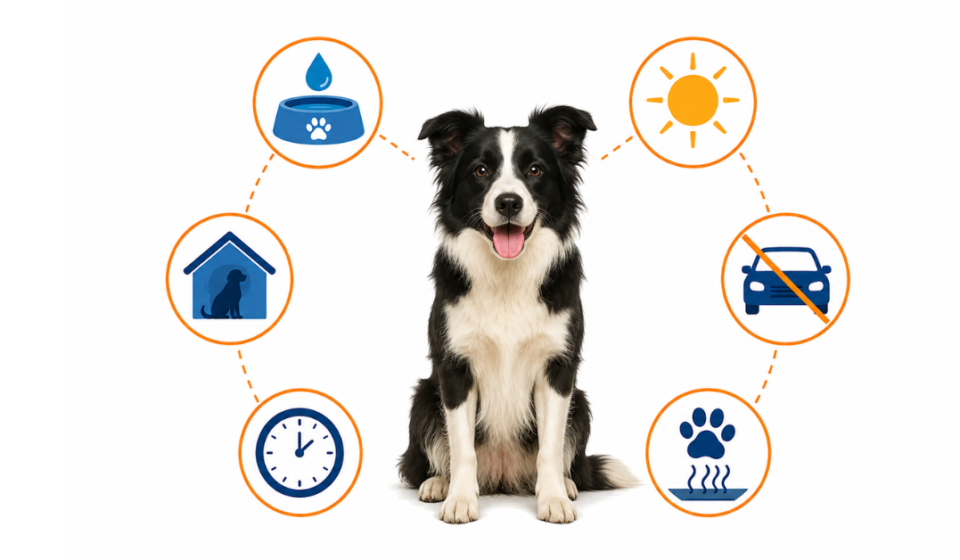
Check the time. Pet parents should prioritize early morning and late evening walks and avoid walking dogs during the hottest parts of the day. Between 10 a.m. and 4 p.m., the risk is highest.
Test the pavement. Place a hand on the surface for seven seconds before every walk. If it is uncomfortable for a human hand, it will cause pain and potential burns to a dog’s paw pads.
Check the forecast. On days when a heat advisory is issued for people, it applies to pets as well. Keeping dogs indoors during heat advisories is strongly recommended.
Evaluate your dog’s fitness level. Dogs that are out of shape, newly adopted, or not acclimatized to heat face higher risks during exercise. Shorter, less intense outings are safer during summer.
During Outdoor Time
Always carry water. Hydration does not wait until a dog appears thirsty. Dogs should be offered water at regular intervals on any warm-weather outing, not just when they show obvious signs of thirst.
Watch for behavioral changes. Heavy panting, seeking shade, whining, and reluctance to play are early signs that a dog is overheating and needs to be brought into cool air conditioning with access to water immediately.
Avoid vigorous play in direct sunlight. Fetch games and off-leash running sessions should be moved to shaded areas or relocated to cooler parts of the day entirely.
Never leave a dog in a parked car. Even briefly and even with windows cracked, this is one of the most preventable causes of heatstroke deaths in dogs every year.
At Home
Provide consistent access to shade and cool spaces. Making sure a pet always has access to a cool, shaded area both indoors and outside is a fundamental part of summer safety.
Keep water fresh and available at all times. Ice cubes can be added to the bowl to keep it cooler for longer, and multiple water stations are helpful in larger homes.
Consider a cooling mat or fan. The movement of air over a dog’s body through a fan will genuinely help them cool down more effectively, particularly for double-coated breeds.
Never leave a dog in a conservatory, greenhouse, or poorly ventilated room. It does not always have to be hot outside for an animal to develop heatstroke. Being left in a warm or humid environment that is poorly ventilated can cause dogs to overheat quickly.
First Aid: What to Do Before the Vet Arrives
If a dog is showing signs of heatstroke, acting quickly and correctly in those first minutes is critical. Cooling a dog prior to arrival at the hospital has been shown to increase survival chances from 50 percent to 80 percent.
Step-by-Step First Response
Step 1: Move the dog immediately to a shaded or air-conditioned space. Do not wait to assess the situation. Every second of continued heat exposure makes recovery harder.
Step 2: Provide good ventilation and airflow, for example by using a fan. Offer the dog fresh, cool water but do not try to force it to drink.
Step 3: Wet the dog with room temperature water and drape wet towels on the back during transportation to the hospital. Never use ice, as it can increase the risk of shock and even cause hypothermia.
Step 4: Call a veterinarian immediately, even while administering first aid. A professional can provide real-time guidance over the phone and prepare for the dog’s arrival.
Step 5: For double-coated breeds such as Siberian Huskies, Pomeranians, and Great Pyrenees, be sure to wet down to the skin, as the outer coat can trap heat and prevent effective cooling.
Recovery and Long-Term Outlook
Most dogs that survive the initial 24 hours will live but will remain hospitalized on intravenous fluids and supportive care for two to three days. Once discharged, they will need rest and extra care, but typically they can make a full recovery and go on to live normal lives.
The severity of long-term outcomes depends heavily on how quickly treatment began, how high the dog’s temperature climbed, and for how long it stayed elevated. Several significant risk factors for death in heatstroke cases include obesity, a prolonged time lag of over 90 minutes from the heat insult to veterinary care, and the occurrence of conditions such as acute kidney injury or seizures.
This underscores the single most important message of summer dog safety: time matters more than anything else. The sooner cooling begins and the sooner a veterinarian is involved, the better the outcome.
Building Better Habits Before the Temperature Peaks
June is a transition month. The novelty of summer has not worn off, outdoor plans are exciting, and many pet owners have not yet mentally shifted into the high-alert mode that peak summer heat demands. That mental shift needs to happen now, before the first brutally hot week arrives.
Small changes in routine make an enormous difference. Shifting walks by two hours, adding a second water bowl, replacing a midday fetch session with an indoor puzzle game, these are not sacrifices. They are the kinds of adjustments that keep dogs safe and healthy through the longest, hottest months of the year.
The summer belongs to dogs and their owners equally. With the right preparation, it stays that way.
Frequently Asked Questions
1. At what temperature does heatstroke become dangerous for dogs?
Heat exhaustion in dogs begins when core body temperature exceeds 103 degrees Fahrenheit, and heatstroke is reached at 106 degrees Fahrenheit. At that point, organ damage becomes a real risk and veterinary care is urgently needed.
2. Can a dog get heatstroke even in the shade?
Yes. It does not always have to be hot outside for a dog to develop heatstroke. Being left in a warm or humid environment that is poorly ventilated can cause dogs to overheat quickly. Shade reduces sun exposure but does not eliminate heat risk, especially in humid conditions.
3. How quickly can heatstroke develop in a parked car? On a 90-degree day, interior car temperatures can reach 109 degrees in just 10 minutes, and a dog can succumb to heatstroke within minutes, even if the car is not parked in direct sunlight.
4. What is the most common cause of heatstroke in dogs?
Research shows that exercise is the most common trigger of heat-related illness in dogs, accounting for the majority of cases. Heatstroke from exercise is just as likely to be fatal as heatstroke from vehicular confinement.
5. Which dog breeds are at the highest risk of heatstroke?
Brachycephalic breeds such as Bulldogs, Pugs, and Pekingese face elevated risk, as do overweight dogs. Older flat-faced dogs are particularly at risk of developing heat-related illness simply from sitting outside in warm weather.
6. Should ice be used to cool a dog with heatstroke?
No. Ice should never be used when cooling a dog with heatstroke, as it can increase the risk of shock and even cause hypothermia. Room temperature water and wet towels are the recommended approach.
7. Does pre-cooling a dog before the vet improve survival?
Significantly. Cooling a dog prior to arrival at the hospital has been shown to increase survival chances from 50 percent to 80 percent.
8. Can a young, healthy dog still get heatstroke?
Absolutely. Male dogs and younger dogs are actually more likely to develop heat-related illness triggered by exercise. No dog is immune to the effects of overheating.
9. How long does recovery from heatstroke take?
Most dogs that survive the initial 24-hour period will recover, though they typically remain hospitalized for two to three days. A veterinarian will likely want to recheck blood work one to two weeks after the heatstroke event to ensure all organs are functioning properly.
10. Is it safe to walk a dog when the temperature feels comfortable to humans?
Not necessarily. Some dogs, especially those who are overweight, flat-faced, or have thick coats, may experience heatstroke during exercise even at relatively low temperatures of 70 to 75 degrees Fahrenheit. The dog’s physical condition, breed, and the humidity level all matter as much as the air temperature itself.