
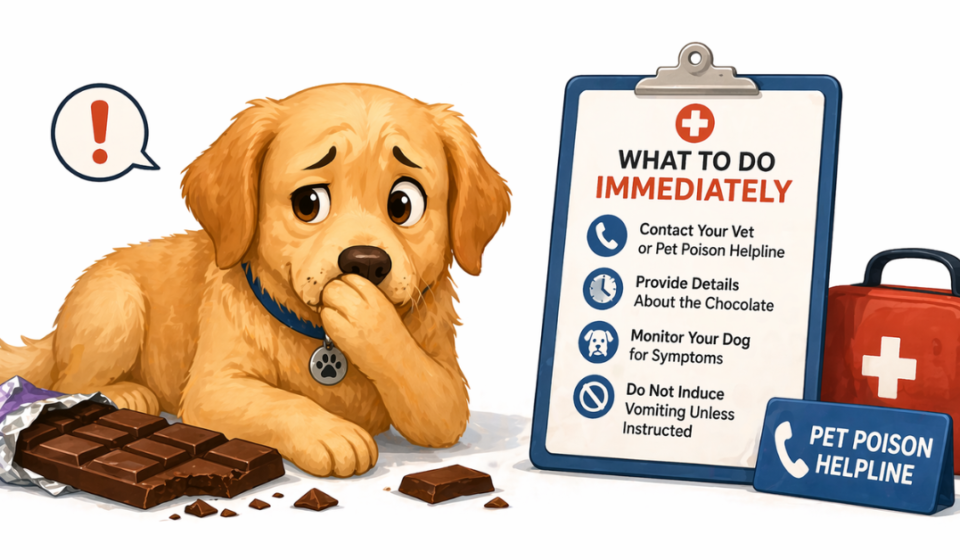

It happens in the blink of an eye. A chocolate bar left on the counter, a holiday goodie bag within nose reach, or a well-meaning guest slipping the dog a treat. Then comes that sinking feeling when a pet owner realizes their dog has eaten chocolate. For millions of households, this is not a rare scenario. According to the American Kennel Club, chocolate ingestion is one of the most frequently reported pet poisoning cases every year in the United States, and it continues to spike around holidays like Halloween, Christmas, Valentine’s Day, and Easter.
What makes this situation so alarming is that many dog owners do not immediately understand the severity of what has happened. The dog may appear fine, tail wagging, no visible distress. This is precisely what makes chocolate toxicity so deceptive and so dangerous. Symptoms of chocolate poisoning can take anywhere from 6 to 12 hours to appear, which means a dog can seem perfectly healthy long after consuming a potentially harmful amount.
The truth is, chocolate is genuinely toxic to dogs, not mildly upsetting to the stomach as some might assume. Chocolate contains harmful compounds, specifically theobromine and caffeine, that elevate a dog’s heart rate and stimulate their nervous system. Understanding why chocolate is dangerous, how to identify the warning signs, and what steps to take immediately can make the difference between a full recovery and a life-threatening emergency.
Why Chocolate and Dogs Simply Do Not Mix
The Science Behind the Toxicity
Cocoa contains compounds known as methylxanthines, specifically theobromine and caffeine, and while humans can consume and enjoy these chemicals, dogs cannot metabolize them properly. The biological difference lies in how slowly a dog’s liver processes these compounds. What the human body clears within hours can linger in a dog’s system for much longer, allowing toxicity levels to build steadily.
Theobromine has a long half-life and it can stay in a dog’s system for days, and it can take up to 72 hours for the first symptoms of chocolate poisoning to begin to ease. This prolonged exposure to the toxin is what makes early treatment so critical. The body essentially keeps absorbing and recirculating the compound, and the longer it remains untreated, the more damage it can cause to the heart, nervous system, and kidneys.
Not All Chocolates Are Equal
Dark and baking chocolate contain the highest levels of theobromine and are the most toxic, while milk chocolate is less concentrated but still unsafe. Understanding these distinctions helps assess the urgency of the situation. Here is a breakdown of theobromine and caffeine concentrations across common chocolate types, based on Pet Poison Helpline data:
| Chocolate Type | Theobromine (per oz) | Caffeine (per oz) | Relative Risk |
|---|---|---|---|
| White Chocolate | 0.25 mg | 0.85 mg | Lowest (fat risk) |
| Milk Chocolate | 44 to 60 mg | 6 mg | Moderate |
| Dark Semi-Sweet Chocolate | 135 mg | 20 mg | High |
| Unsweetened Baking Chocolate | 390 to 450 mg | 47 mg | Very High |
| Dry Cocoa Powder | 400 to 737 mg | 70 mg | Extremely High |
White chocolate has lower levels of theobromine, but its fat content still means it can cause potentially life-threatening pancreatitis. So even the seemingly harmless varieties of chocolate carry real risks for dogs.
What Puts a Dog at Greater Risk
Size, Weight, and Health Status
A dog’s weight impacts how the chocolate affects their body, and small dogs are more susceptible to chocolate poisoning than larger dogs. Milk chocolate becomes toxic to dogs at approximately 0.5 to 1 ounce per pound of body weight, meaning a 10-pound dog may show symptoms after eating just 5 to 10 ounces. Puppies, senior dogs, and those with existing heart or kidney conditions face even greater risk at lower doses.
A small dog that eats a small amount of dark chocolate could get much sicker than a large dog that eats a larger amount of white chocolate, because of their size, the type of chocolate, and how much they were able to ingest. These variables are exactly why a veterinarian needs to be involved in assessing any incident, regardless of how minor it may appear on the surface.
The Holiday Risk Factor
Chocolate poisoning cases spike dramatically during holidays. Chocolate is a major part of several celebrations, and pet parents should be wary because chocolate is a major toxin for dogs. Trick-or-treat bags left on the floor, advent calendar chocolates, and Valentine’s Day boxes all present significant hazards. Even cocoa-based mulch used in gardens has been linked to fatal outcomes in dogs.
Recognizing the Warning Signs
Early Symptoms to Watch For
Mild chocolate toxicity often appears as slight stomach upset, increased thirst, or panting, and a dog might seem more energetic than usual or have soft stool within hours of eating milk chocolate. These mild symptoms are easy to dismiss, which is exactly why they must never be ignored.
Common early symptoms include:
Vomiting and diarrhea are often among the first signs the body is reacting to the toxic compounds. Excessive thirst and urination may follow soon after, as the kidneys begin working harder to process the substances. Restlessness, hyperactivity, or unusual pacing can signal nervous system stimulation. Panting and muscle tremors may indicate that the theobromine is affecting the cardiovascular and neurological systems.
Severe Symptoms Requiring Emergency Care
Serious chocolate poisoning shows up as agitation, elevated heart rate, muscle tremors, or continuous vomiting, and a dog may develop an irregular heartbeat, have trouble walking, or show signs of stomach discomfort. If a dog begins seizing, collapses, or becomes unresponsive, that is a life-threatening emergency requiring immediate action. With any poisoning, it is always cheaper, less invasive, and has a better prognosis if treated early.
The Right Steps to Take Immediately
Step One: Stay Calm and Gather Information
Panicking wastes precious time. The first priority is to collect key details that a veterinarian will need. When calling the vet, they will ask exactly what the dog ate, how much was eaten, and how much the dog weighs. If the packaging is available, hold onto it. Taking the chocolate’s packaging to the vet allows them to determine how much of the toxin the pet consumed.
Step Two: Call a Veterinarian or Poison Helpline Right Away
If a dog is known to have eaten chocolate, do not wait for any symptoms to appear; call the vet immediately. If it is after hours and the veterinarian’s clinic is closed, call a local emergency vet. Pet owners can also contact the Pet Poison Helpline at 855-764-7661 or an emergency vet right away. The Pet Poison Helpline is available 24 hours a day, 7 days a week, for pet owners and veterinary professionals requiring assistance treating a potentially poisoned pet.
Step Three: Do Not Attempt Home Treatment
It is best not to attempt first aid at home, and pet parents should act fast and get their dogs to an emergency vet if any adverse symptoms are noticed. Attempting to induce vomiting at home without veterinary guidance can cause additional harm. Only a licensed veterinarian should make that call based on timing, the dog’s health status, and the type and quantity of chocolate ingested.
Step Four: Follow Veterinary Instructions Precisely
If the pet consumed the chocolate less than two hours ago, the veterinarian may induce vomiting and give several doses of activated charcoal, which works to move the toxins out of the body without being absorbed into the bloodstream. In more advanced cases, IV fluids, heart monitoring, and medication to control tremors or seizures may be required. A vet may choose to hospitalize a dog for up to 72 hours for severe cases.
What Happens at the Veterinary Clinic
Assessment and Treatment Options
Treatment for chocolate toxicity depends on the clinical signs displayed by the animal. If a patient has life-threatening clinical signs, those will be managed first. Otherwise, treatment involves decontamination with medication to induce vomiting, even if it has been a few hours after ingestion, since chocolate tends to absorb slowly. Most patients require hospitalization.
Treatment recommendations may include decontamination, gastrointestinal support, fluid support, heart rate monitoring, and blood pressure monitoring. The veterinary team will assess the dog’s current condition and begin the most appropriate intervention based on the timeline and severity of the case.
Recovery and Prognosis
The outcome of chocolate toxicity depends on the amount and type ingested, the dog’s weight, and how promptly treatment was initiated. Dogs with mild signs or those that ingested small amounts generally have a good prognosis with prompt treatment. Recovery timelines vary. Mild cases may resolve in just a few hours, while more severe poisoning can last for days, and some dogs may require follow-up care to fully recover.
Preventing Chocolate Access at Home
Prevention is the most powerful tool available to any dog owner. All chocolate items, including cocoa powder and hot chocolate mix, should be stored where the dog cannot reach them, such as on a high shelf in a closed-door pantry. During holidays, it is especially important to keep candy bags, Easter baskets, and chocolate gifts secured and out of reach.
Reminding family members and guests never to feed chocolate to pets is also essential, along with being mindful of baked goods, cocoa powder, and hot chocolate, which can also be dangerous. Some treat makers use carob powder, which is harmless, as a substitute for chocolate, and this can be offered as a safe and equally enjoyable alternative for dogs.
Children in the household should be taught from an early age that sharing their chocolate treats with the dog is never a kind gesture, no matter how much those puppy-dog eyes beg for a bite.
When the Dog Seems Fine After Eating Chocolate
This is one of the most misleading situations a pet owner can face. If a dog ate chocolate but is acting fine, it is still best to play it safe and contact a vet, because even if they are not in immediate danger, early intervention is crucial for preventing long-term health consequences, which can include kidney failure and heart disease.
Waiting for symptoms can put a dog’s health at risk, and a quick veterinary assessment is always the safest option. A seemingly calm and comfortable dog can deteriorate rapidly once the theobromine reaches peak concentration in the bloodstream. The absence of symptoms is not clearance. It is a window of opportunity to act before symptoms begin.
Key Facts About Chocolate Toxicity in Dogs
Chocolate poisoning is among the most reported pet emergencies in the United States every year. Theobromine, the primary toxic compound in chocolate, can remain active in a dog’s system for up to 72 hours. Dry cocoa powder contains the highest concentration of theobromine of all commonly available chocolate products. A dose of just one ounce of milk chocolate per pound of body weight is considered a potentially deadly dose for most dogs. Dark and baking chocolate can be fatal at far lower quantities, especially for small dog breeds. Prompt treatment within the first two hours of ingestion offers the best chance of full recovery without serious complications.
A Final Word on What Truly Matters
No pet owner ever plans for this kind of emergency, but every dog owner should be prepared for it. Dogs are curious, opportunistic, and powerfully motivated by smell and taste. Chocolate, with its rich aroma and inviting texture, is almost irresistible to them, and they have no way of knowing it poses a serious threat.
The most important takeaway from all of this is deceptively simple: act fast, and never wait and see. Time is the single most critical variable in determining how a chocolate ingestion case unfolds. Whether a dog ate a small broken piece of a milk chocolate bar or devoured half a bag of dark chocolate baking chips, the response should always be the same. Call a veterinarian. Provide as much information as possible. Follow professional guidance without attempting shortcuts at home.
Prevention, of course, remains the gold standard. Keeping chocolate stored securely, educating everyone in the household, and choosing dog-safe treat alternatives like carob-based snacks can eliminate the risk entirely. But when an incident does occur, knowing the facts and acting with urgency can quite literally save a dog’s life. A few minutes spent making the right phone call today is worth far more than days of worry and a far more complicated recovery process down the road. Every dog deserves that chance.
Frequently Asked Questions
Q1. Is any amount of chocolate safe for dogs to eat?
No amount of chocolate is considered safe for dogs. Even small quantities can cause gastrointestinal distress, and larger amounts or more concentrated types such as dark or baking chocolate can lead to serious health emergencies.
Q2. How quickly do symptoms appear after a dog eats chocolate?
Symptoms of chocolate toxicity typically develop within 6 to 12 hours and range from mild, such as increased thirst and panting, to severe, such as tremors and seizing. In some cases, full symptom onset may be delayed for up to 24 hours.
Q3. What should be done if it is after hours and the regular vet is unavailable?
If it is after hours and the veterinarian’s clinic is closed, calling a local emergency vet is the recommended course of action. The Pet Poison Helpline is also available around the clock for guidance.
Q4. Can a large dog eat chocolate without serious consequences?
Larger dogs can tolerate higher absolute amounts, but no dog is immune to chocolate toxicity. The type of chocolate, the specific amount ingested relative to body weight, and the dog’s overall health all factor into the severity of the outcome.
Q5. What information should be ready when calling a vet about chocolate ingestion?
A veterinarian will ask exactly what the dog ate, how much was eaten, and how much the dog weighs. Having the chocolate packaging on hand to provide the exact product name and cocoa content is also very helpful.
Q6. Is white chocolate less dangerous than dark chocolate?
White chocolate has far lower theobromine levels than dark or baking chocolate, but it is not safe. Its high fat content puts dogs at risk for pancreatitis, which is a serious and painful condition requiring veterinary care.
Q7. Can chocolate poisoning be fatal for dogs?
Yes. In severe cases, particularly involving dark chocolate, baking chocolate, or cocoa powder consumed in significant quantities, chocolate poisoning can be fatal. Deaths have been reported even from cocoa bean hull mulch used in gardens.
Q8. What does activated charcoal do in treating chocolate toxicity?
Activated charcoal works to move toxins out of the body without allowing them to be absorbed into the bloodstream, reducing the overall toxic load the dog’s system has to process.
Q9. How long does it take for a dog to recover from chocolate poisoning?
Recovery time depends on how quickly treatment begins and the individual dog’s overall health. Mild cases may resolve in just a few hours, while more severe poisoning can last for days, and some dogs may require follow-up care.
Q10. How can chocolate ingestion be prevented in the long term?
Storing all chocolate products in closed, elevated spaces out of a dog’s reach, educating household members and guests about the dangers, and replacing chocolate treats with carob-based alternatives are the most effective long-term prevention strategies.