
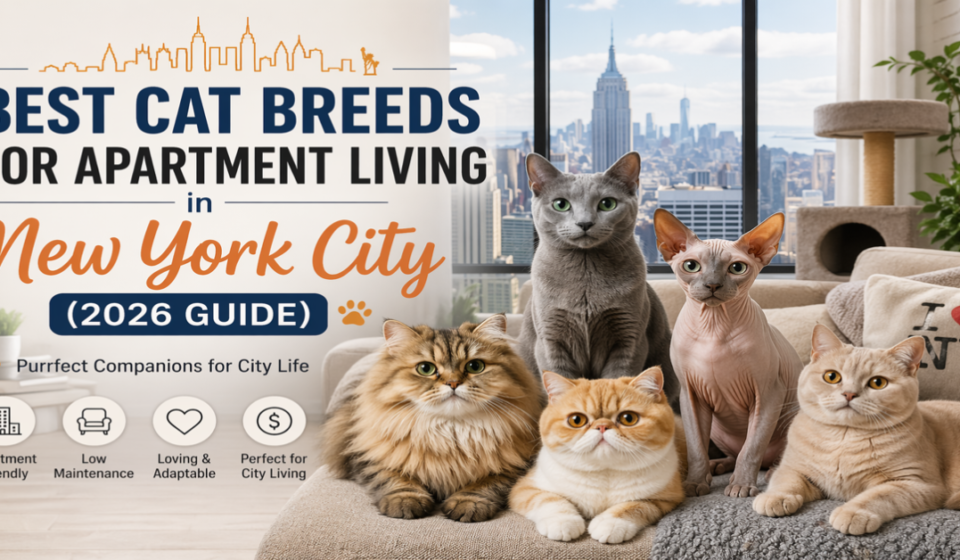

New York City has long been one of the most cat-friendly major cities in the United States, despite its reputation for cramped living spaces and endless noise. For millions of city residents, a cat is more than a pet. It is a companion, a comfort, and in many cases, the best roommate they have ever had. But bringing just any cat into a 500-square-foot studio apartment on the Upper West Side or a compact one-bedroom in Astoria is a decision that deserves far more thought than most people give it.
The truth is, not every cat breed handles urban living with the same grace. Some breeds thrive in small, enclosed spaces. They are naturally calm, adaptable to noise, and content with indoor environments. Others were bred for wide-open spaces and high activity levels, and confining them to a city apartment, no matter how lovingly decorated, can lead to behavioral issues, restlessness, and stress for both the cat and the owner. Understanding the difference between these breeds before making a choice is one of the most important steps any prospective cat owner in New York City can take in 2026.
According to the American Pet Products Association, cat ownership in the United States reached record highs following the remote-work era, and urban centers like New York City saw a notable spike in first-time pet adoptions.
As rental units grow smaller and city living becomes increasingly the norm for younger generations, the conversation around which cat breeds genuinely adapt well to apartment life has never been more relevant. This guide walks through the best choices available, the traits that matter most in a city cat, and everything a future owner needs to know before making the leap.
Why Breed Choice Matters More in a City
Choosing a cat breed for an NYC apartment is not purely an aesthetic decision. It is a lifestyle consideration rooted in animal behavior, space psychology, and the unique pressures of urban living. A cat that thrives in a suburban house with a yard and multiple rooms will not necessarily transition well to a 12th-floor apartment where the windows face a busy avenue and the nearest “outdoor” space is a hallway.
Several core traits determine whether a cat will flourish or struggle in a compact urban setting. These include energy level, vocality, independence versus sociability, grooming needs, sensitivity to noise, and adaptability to being alone during long work hours.
NYC residents often work demanding schedules, which means many cats will spend significant portions of the day in a quiet apartment with little stimulation. Breeds that handle solitude well, without developing separation anxiety or destructive habits, are naturally better suited to this environment.
What Makes a Cat Truly Apartment-Ready
A truly apartment-ready cat tends to have a laid-back temperament, a low to moderate energy drive, and a quiet communication style. It should be comfortable with indoor enrichment, meaning it can stay mentally stimulated through toys, vertical climbing spaces, and window observation without demanding constant outdoor access. Noise sensitivity matters as well, since New York City apartments can experience everything from street sirens and construction noise to noisy neighbors and thin walls.
Top Cat Breeds for NYC Apartment Living in 2026
1. British Shorthair
Few breeds embody the spirit of calm urban living quite like the British Shorthair. These cats are famously easygoing, highly tolerant of apartment-sized spaces, and remarkably unfussy about daily routines. They tend to be independent without being cold, enjoying human company without demanding constant attention. Their low energy level means they are not likely to tear around a studio apartment at 3 a.m., which is a meaningful quality in thin-walled NYC buildings.
British Shorthairs are also exceptionally quiet. They rarely vocalize unnecessarily, which is a major advantage in close-quarters apartment life. Their short, plush coat requires minimal grooming, making them a low-maintenance choice for busy professionals. In 2026, they remain one of the most popular breeds for city residents precisely because they are the definition of easy companionship.
2. Ragdoll
The Ragdoll is often called the “puppy cat” for its tendency to follow its owners from room to room and its striking tolerance for being picked up and held. Despite their large size, Ragdolls are gentle giants with calm personalities that translate beautifully to apartment life. They are notably quiet, rarely given to excessive meowing, and they bond deeply with their owners while remaining perfectly comfortable indoors.
Ragdolls are moderately active, which means they enjoy play sessions but are equally happy resting in a sunlit spot by the window between activities. For NYC residents who work from home or have flexible schedules, the Ragdoll offers affectionate companionship without the demanding neediness that some highly social breeds can develop.
Grooming Consideration
Ragdolls have semi-long fur that requires brushing a few times per week to prevent matting. For a busy city resident, this is a manageable but important routine to maintain.
3. Russian Blue
The Russian Blue is a breed with a near-perfect profile for apartment living. These cats are quiet, intelligent, and highly adaptable. They form strong bonds with their primary caretakers but tend to be reserved or shy around strangers, which makes them ideal for the privacy and social variability of city apartment life. They handle solitude surprisingly well compared to many other breeds, making them a reliable choice for professionals who spend long hours at the office.
Russian Blues have short, dense coats that require very little grooming, and their health is generally robust. Their playful side emerges during dedicated play sessions, but they are equally content observing the world from a perch near the window. Studies in animal behavior suggest that cats with moderate stimulation needs paired with high adaptability show significantly less stress in smaller living environments.
4. Scottish Fold
The Scottish Fold, recognizable by its unique folded ears and round, owl-like appearance, is a gentle and highly adaptable breed. These cats tend to have low to moderate energy levels, a quiet disposition, and a calm acceptance of apartment routines. They are affectionate without being clingy and adjust well to changes in schedule or environment, which matters greatly in the unpredictable rhythm of New York City life.
A Note on Scottish Fold Health
It is important for prospective owners to research Scottish Fold breeders carefully. Reputable breeders conduct genetic screening to reduce the risk of the skeletal condition associated with the gene responsible for the folded ears. Adopting from a responsible breeder or a rescue organization that has performed health evaluations is strongly encouraged.
5. Birman
The Birman is a sociable, gentle, and adaptable breed that strikes a natural balance between playfulness and calm. They enjoy being part of daily life without being demanding, and their moderate energy means they are engaged during play but equally comfortable settling in for a quiet evening. Birmans tend to be quiet communicators, using soft chirps rather than loud meows, which makes them considerate neighbors in apartment buildings.
Their silky, semi-long coat does require regular brushing, but their temperament rewards that small commitment many times over. For NYC residents seeking a warm, loyal companion that adapts gracefully to apartment living, the Birman earns its place near the top of the list.
6. American Shorthair
The American Shorthair is one of the most versatile domestic cat breeds available. Bred for generations as working cats, they developed adaptable, resilient temperaments that serve them equally well in modern apartment settings. They are moderately active, playful without being hyperactive, and social without being overly dependent. This breed handles the bustle of city life with quiet confidence.
American Shorthairs are generally healthy, hardy, and easy to care for, with short coats that require very little grooming attention. They tend to be tolerant of changes in environment and routine, which is a significant advantage for NYC residents whose schedules rarely follow a predictable pattern.
7. Persian
The Persian is perhaps the quintessential indoor cat. Bred for beauty and a sedentary lifestyle, Persians are calm, affectionate, and completely uninterested in adventure. They prefer the comfort of a soft cushion and a quiet room over any form of physical exertion, which makes them ideally suited to the limitations of a small apartment. They are exceptionally quiet and rarely disturb neighbors.
The Persian’s primary challenge is grooming. Their long, luxurious coat requires daily brushing and regular professional grooming to remain healthy and tangle-free. For residents willing to invest time and care into coat maintenance, the Persian rewards its owner with a deeply devoted and serene companion.
8. Devon Rex
The Devon Rex stands out from the calmer breeds on this list as a highly playful, mischievous, and interactive cat. What makes them apartment-friendly despite their high energy is their small size, their very low-shedding curly coat, and their deep attachment to human companionship. Devon Rex cats do best in households where someone is home frequently. They are social in the most enthusiastic sense and can entertain themselves by exploring every inch of a small apartment with creative curiosity.
Their wavy, short coat sheds minimally, which is a notable advantage in smaller living spaces. Devon Rex cats tend to do particularly well in pairs, and for NYC residents open to adopting two cats, a bonded Devon Rex pair can provide mutual company and reduce the separation anxiety common in this breed.
9. Siamese
A brief but necessary mention: the Siamese is a stunning, intelligent, and deeply affectionate breed that many city residents are drawn to. However, they are among the most vocal cats in existence. Siamese cats communicate loudly and frequently, which can present a real challenge in apartment buildings with close neighbors or noise-sensitive living situations. They are not a poor choice outright, but prospective owners in NYC should weigh their living situation carefully before choosing a Siamese.
10. Maine Coon
The Maine Coon is a large, gentle, and highly intelligent breed with a dog-like loyalty to its family. They are playful and interactive but handle apartment life reasonably well if provided with adequate vertical space, including cat trees and climbing shelves, and regular interactive play. Their thick, semi-long coat requires consistent grooming. Maine Coons tend to be moderately vocal with a distinctive chirping trill rather than a loud meow, making them more neighbor-friendly than their size might suggest.
Setting Up a Cat-Friendly NYC Apartment
Choosing the right breed is only the first step. Creating an environment where a city cat genuinely flourishes takes a bit of intentional design. Vertical space is arguably the most important investment. Cat trees, wall-mounted shelves, and window perches give cats the elevated territory they instinctively seek, effectively expanding a small apartment in ways that matter to feline psychology.
Window access is equally significant. Even a cat with no desire to go outside benefits enormously from watching birds, squirrels, and street life from a secure window perch. Bird feeders placed on an exterior ledge or windowsill (where building rules permit) can provide hours of natural enrichment.
Interactive toys, puzzle feeders, and regular dedicated play sessions help manage energy and prevent boredom-related behavioral issues in active breeds. For owners with demanding schedules, automated toys and puzzle feeders can supplement daily play with minimal effort.
Noise Management and Stress Reduction
New York City apartments can be genuinely stressful environments for sound-sensitive cats. Strategic use of white noise machines, thick rugs, and window insulation can meaningfully reduce the acoustic impact of street noise and neighboring activity. Creating a designated quiet space, such as a cozy enclosed cat bed in a less trafficked corner of the apartment, gives a cat a reliable retreat when the environment feels overwhelming.
Adoption vs. Buying from a Breeder in NYC
New York City has a robust network of cat rescues and adoption organizations that frequently have purebred and breed-mix cats available. Organizations like the ASPCA, the Mayor’s Alliance for NYC Animals, and numerous breed-specific rescues operate throughout the five boroughs. Adoption is always a meaningful option and often places cats that are already socialized to apartment life.
For those seeking a specific breed with a documented health history, working with a reputable, TICA or CFA-registered breeder is the responsible path. Prospective owners should always ask about genetic health testing, socialization practices, and living conditions for the kitten’s early weeks, as these factors significantly shape adult temperament.
Finding the Right Companion for City Life
Picking the right cat for an NYC apartment in 2026 is less about finding the most beautiful breed and more about finding the one whose nature aligns with the realities of city living. The breeds covered in this guide represent a range of personalities, activity levels, and care needs, each one capable of thriving in an urban environment when the right conditions are in place.
The British Shorthair offers unmatched calm. The Ragdoll brings gentle warmth. The Russian Blue provides intelligent independence. The Scottish Fold adapts with quiet ease. The Birman rewards with genuine loyalty. The American Shorthair delivers easygoing resilience. The Persian offers serene companionship in exchange for grooming devotion. The Devon Rex brings playful energy with minimal shedding. Each breed presents a different version of what apartment cat ownership can look like, and none of them requires the owner to sacrifice quality of life or sanity.
What ties all of these choices together is the foundational principle that a cat’s happiness in a city apartment is not an accident. It is the result of a thoughtful match between feline temperament and human lifestyle, supported by an enriched environment, consistent care, and a genuine understanding of what each breed needs to feel safe, stimulated, and content. New York City may not have wide open fields or sprawling gardens to offer a cat, but it has something just as valuable: millions of dedicated, passionate pet owners ready to give these animals exactly the kind of life they deserve, one cozy, well-decorated urban apartment at a time.
FAQs: Best Cat Breeds for NYC Apartments
Q1. Which cat breed is the absolute best for a small NYC studio apartment?
The British Shorthair and Russian Blue consistently rank as top choices for studio apartments due to their calm temperament, low vocality, and contentment with limited space.
Q2. Are cats happy living in apartments with no outdoor access?
Many breeds, particularly those listed in this guide, adapt very well to fully indoor lives. Adequate enrichment, vertical space, and interactive play are the key factors in their wellbeing.
Q3. How do I reduce a cat’s stress in a noisy NYC building?
White noise machines, quiet retreat spaces, and calming pheromone diffusers can significantly reduce a cat’s acoustic stress in a busy urban environment.
Q4. Can two cats from different breeds live together in a small apartment?
Yes, in most cases. Compatibility depends more on individual temperament than breed, but pairing calm breeds together or introducing cats gradually tends to produce positive results in smaller spaces.
Q5. What is the best low-maintenance cat for a busy NYC professional?
The Russian Blue and American Shorthair are standout options for busy owners. Both have short, easy-care coats and manage solitude well without developing significant behavioral issues.
Q6. Is a Maine Coon too large for a New York City apartment?
Size alone does not disqualify a Maine Coon from apartment life. With adequate climbing structures and regular play, Maine Coons adapt reasonably well. Their large size does, however, require a somewhat larger investment in space planning and enrichment.
Q7. Are Ragdolls good for first-time cat owners in NYC?
Ragdolls are widely considered an excellent choice for first-time owners. Their gentle, forgiving temperament and manageable care needs make the learning curve of pet ownership feel genuinely rewarding rather than overwhelming.
Q8. Do hypoallergenic cats exist, and are any of them good for apartments?
No cat breed is fully hypoallergenic, but some produce lower levels of the Fel d 1 protein that triggers most human allergies. The Devon Rex and Siberian are frequently cited as lower-allergen options, with the Devon Rex being particularly well suited to apartment living.
Q9. How much living space does a cat truly need in an NYC apartment?
There is no precise square footage requirement. Cats prioritize territory quality over quantity. A well-enriched 400-square-foot apartment with vertical climbing space and stimulating activities can serve a cat far better than a larger but barren space.
Q10. Should someone adopt a kitten or an adult cat for an NYC apartment?
Adult cats are often a smarter choice for busy city residents. Their personalities are fully established, which removes the unpredictability of kitten development, and they tend to require less intensive supervision and correction during the adjustment period.