
A peaceful afternoon can shift in seconds when a dog suddenly begins pawing at the mouth, gagging, or gasping for air. Panic rises quickly in these moments, yet decisive and informed action makes the difference between relief and tragedy. Choking is one of the most frightening emergencies in pet care because it disrupts breathing, and oxygen deprivation can escalate rapidly.
Dogs explore the world with their mouths. Toys, bones, food scraps, and even small household items can become dangerous obstructions. While many dogs cough up minor irritants on their own, a complete airway blockage demands immediate intervention. Recognizing choking signs dogs display and knowing exactly what to do reduces hesitation and increases the chance of a positive outcome.
Preparation transforms fear into focus. A practical pet first aid guide, familiarity with the dog heimlich maneuver, and awareness of emergency dog care protocols empower responsible decision making. The following comprehensive guide provides clear, structured instructions for dog choking what to do, including early warning signs, hands on techniques, and post emergency monitoring.
Recognizing the Warning Signs
Early recognition is the first and most crucial step in emergency dog care. Choking can present subtly at first, then escalate quickly.
Common Choking Signs Dogs Display
Dogs experiencing airway obstruction often show:
- Persistent gagging or retching
- Sudden coughing that does not resolve
- Pawing at the mouth
- Excessive drooling
- Anxiety or restlessness
- Stretching the neck forward in distress
- Blue or pale gums
- Collapse in severe cases
A key distinction exists between coughing and choking. Coughing usually involves forceful exhalation and may produce sound from the chest. Choking often involves silent struggle, minimal airflow, and visible panic.
Signs of Dog Breathing Trouble
When oxygen flow becomes compromised, dog breathing trouble becomes evident:
- Labored breathing
- No airflow despite visible effort
- Rapid onset of weakness
- Cyanosis, or bluish gums
Immediate action becomes critical when airflow stops entirely. Brain injury can occur within minutes if oxygen deprivation continues.
Why Dogs Choke
Understanding the causes helps reduce future risk and informs quick assessment during an emergency.
Common Objects That Cause Airway Obstruction
Dogs frequently choke on:
- Small balls or toys
- Cooked bones that splinter
- Rawhide pieces
- Large chunks of food swallowed too quickly
- Household items such as socks or fabric
Small breed dogs may be more vulnerable to toy related obstructions, while larger breeds may attempt to swallow oversized items.
Behavioral and Environmental Factors
Some dogs are naturally aggressive eaters. Rapid swallowing increases choking risk. Competition in multi dog households can also trigger fast consumption.
Puppies and young dogs are particularly prone due to curiosity and lack of impulse control.
Immediate Response: Dog Choking What to Do
Calm, structured action improves survival chances. The following sequence reflects core pet first aid guide principles.
Step One: Stay Calm and Assess
Panic delays effective intervention. Observe whether the dog can cough or make noise. If the dog is coughing forcefully, allow an attempt to clear the airway independently while monitoring closely.
If airflow appears completely blocked, immediate intervention is necessary.
Step Two: Safely Check the Mouth
Restrain the dog carefully. Even gentle dogs may bite when in distress.
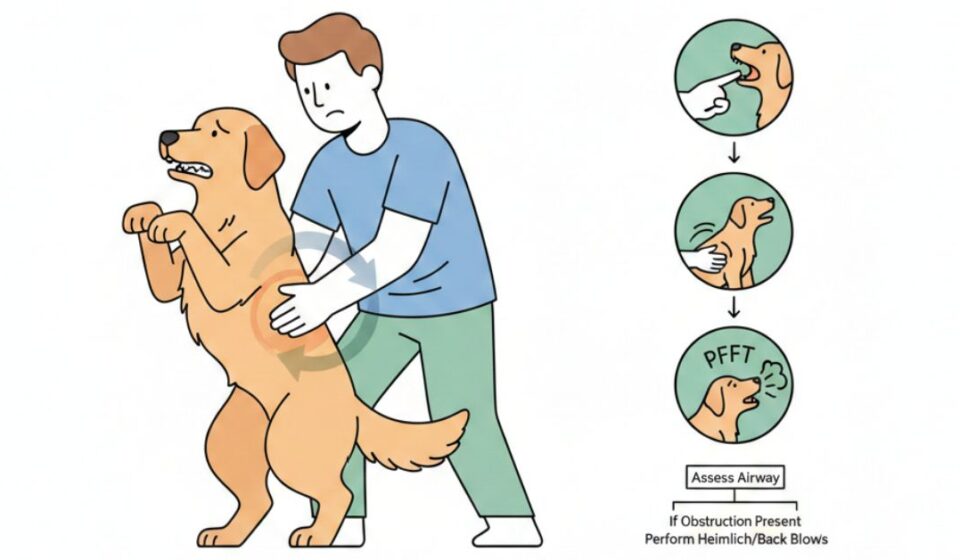
Open the mouth and visually inspect. If a visible object can be safely removed without pushing it deeper, attempt removal using fingers or blunt tweezers. Avoid blind finger sweeps.
If the object cannot be seen or removed easily, proceed to physical intervention.
Performing the Dog Heimlich Maneuver
The dog heimlich maneuver can dislodge an object by creating pressure in the airway. Technique varies by dog size.
For Small Dogs
- Hold the dog with the back against the chest.
- Form a fist and place it just below the rib cage.
- Deliver quick, inward and upward thrusts.
- Repeat up to five times.
- Check the mouth for dislodged objects.
For Large Dogs
- Position the dog standing or lying on the side.
- Place hands just behind the rib cage.
- Apply firm upward thrusts toward the abdomen.
- Repeat up to five times.
- Recheck the mouth after each set.
If the dog is unconscious, lay on the side and apply abdominal thrusts while monitoring breathing.
When Breathing Stops
If the dog collapses and breathing ceases, cardiopulmonary resuscitation may be required.
Rescue Breathing Basics
- Extend the neck to open the airway.
- Close the mouth securely.
- Breathe into the nostrils until the chest rises.
- Deliver one breath every few seconds.
If no heartbeat is detected, chest compressions may be necessary. Immediate transport to veterinary care is critical even if breathing resumes.
After the Object Is Removed
Clearing the airway does not end the emergency. Internal injury may have occurred.
Post Event Monitoring
Watch for:
- Persistent coughing
- Swelling of the throat
- Difficulty swallowing
- Behavioral changes
- Lethargy
Even if the dog appears normal, professional evaluation ensures no hidden trauma exists.
Preventing Future Incidents
Prevention remains the strongest form of protection.
Safer Feeding Practices
- Offer appropriately sized food portions
- Use slow feeding bowls for fast eaters
- Avoid cooked bones
- Supervise treat time
Toy Safety Guidelines
Select toys proportionate to the dog’s size. Replace damaged items promptly.
Below is a reference table for safer selection.
| Dog Size | Toy Diameter Minimum | Food Portion Strategy | Supervision Level |
|---|---|---|---|
| Small Breed | Larger than mouth width | Smaller bite sizes | Constant |
| Medium Breed | Cannot fit fully in mouth | Moderate chunks | Active |
| Large Breed | Oversized durable toys | Controlled pacing | Active |
Emergency Dog Care Preparedness
Preparedness reduces hesitation during crises.
Essential Pet First Aid Guide Supplies
- Blunt tweezers
- Gauze
- Digital thermometer
- Emergency contact numbers
- Muzzle or soft restraint cloth
Keeping emergency veterinary contact information readily accessible is critical.
Key Facts About Canine Airway Emergencies
- Airway obstruction can cause unconsciousness within minutes.
- Brain damage may begin after four to six minutes without oxygen.
- Many choking incidents involve preventable household items.
- Quick response significantly increases survival outcomes.
Pet owners trained in emergency dog care demonstrate greater confidence and faster response times.
When to Seek Immediate Veterinary Care
Professional evaluation becomes mandatory when:
- The object cannot be removed
- The dog loses consciousness
- Breathing does not resume normally
- There are signs of throat injury
- Coughing persists
Even mild swelling can progress. Veterinary assessment ensures airway integrity and prevents complications.
Psychological Impact on Dogs
Choking events can create temporary anxiety around eating or play. Gradual reassurance and calm feeding environments restore confidence. Monitoring behavior in the following days supports emotional recovery.
Conclusion
Choking emergencies demand rapid recognition and decisive action. Knowledge transforms a chaotic moment into a structured response. Recognizing choking signs dogs display, identifying dog breathing trouble early, and applying the dog heimlich maneuver correctly can preserve oxygen flow and save a life. Emergency dog care is not solely about reaction; prevention, preparation, and vigilance reduce the likelihood of recurrence.
A practical pet first aid guide, safe feeding habits, and appropriate toy selection create a safer home environment. Swift intervention, followed by professional evaluation, ensures both immediate survival and long term health. Every responsible pet guardian benefits from mastering dog choking what to do before an emergency ever occurs. Readiness protects not only physical well being but also the bond that defines companionship.
Frequently Asked Questions
1. How can choking signs dogs show be distinguished from coughing?
Choking often involves silent distress and pawing at the mouth, while coughing usually produces sound from the chest and may resolve naturally.
2. Is the dog heimlich maneuver safe for all breeds?
Yes, when performed correctly and adjusted for size. Care must be taken to avoid excessive force.
3. What causes sudden dog breathing trouble during meals?
Rapid swallowing, oversized food chunks, or bone fragments commonly trigger airway blockage.
4. Should a finger sweep be used to remove an object?
Blind sweeps are not recommended because they can push the obstruction deeper.
5. Can small treats cause choking?
Yes. Any object small enough to lodge in the airway poses a risk.
6. What if the dog becomes unconscious?
Begin rescue breathing and seek immediate veterinary assistance.
7. Are certain breeds more prone to choking?
Short nosed breeds may experience airway challenges, though any breed can choke.
8. How long can a dog survive without oxygen?
Brain injury risk increases after several minutes without oxygen.
9. Should veterinary care be sought after a successful removal?
Yes. Internal injury or swelling may not be visible immediately.
10. How can emergency dog care skills be learned?
Structured pet first aid courses provide hands on instruction and improve response confidence.