
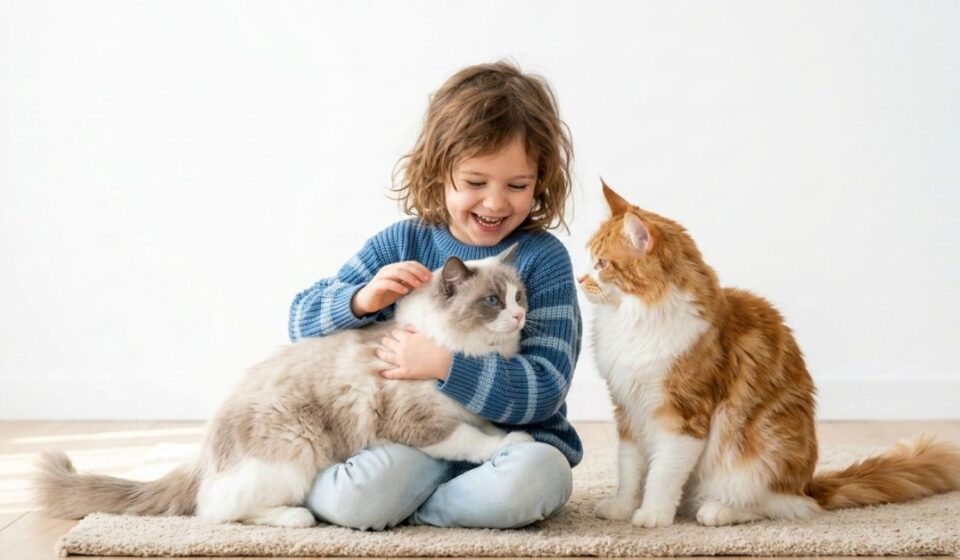

Bringing a cat into a household with children changes the rhythm of everyday life. Laughter grows louder, quiet evenings feel warmer, and simple routines become shared rituals. Yet not every cat adapts easily to busy homes filled with toys, noise, and constant movement. The difference between harmony and stress often comes down to temperament.
The best cat breeds for families are those that combine patience with affection, resilience with calm behavior. Children tend to be energetic and curious. A cat that tolerates gentle handling, playful interaction, and occasional unpredictability creates a foundation for a healthy bond. When personality aligns with environment, companionship thrives.
Many families search for child friendly cats that can live comfortably indoors, handle attention gracefully, and remain relaxed around visitors. The right breed does not simply coexist with children. It participates in family life. From calm cat breeds known for steady temperaments to beginner friendly cats that require moderate care, certain breeds consistently stand out for households with kids.
Why Breed Temperament Matters in Family Homes
While every cat is an individual, breed tendencies offer meaningful guidance. According to data published by the American Veterinary Medical Association, companion animals contribute to improved emotional well being in children, including increased empathy and responsibility. However, these benefits depend heavily on safe, positive interactions.
The Traits That Define Family Friendly Cats
Certain behavioral qualities make a significant difference in homes with children:
Patience and Tolerance
Child friendly cats tolerate gentle petting, occasional clumsiness, and active environments without aggressive responses.
Affection Without Dependency
The best cat breeds for families enjoy attention but do not become anxious when left alone for short periods.
Playfulness With Boundaries
Playful cats engage with children while remaining gentle and controlled during interaction.
Adaptability
Indoor family cats must adjust to noise, visitors, and varying routines without excessive stress.
Key Characteristics of the Best Cat Breeds for Families
Selecting a cat should never focus solely on appearance. Temperament, grooming needs, energy level, and health patterns must all align with family dynamics.
Calm Temperament
Calm cat breeds tend to remain composed in stimulating environments. These cats are less likely to hide constantly or react defensively to sudden sounds.
Gentle Disposition
Gentle cat breeds interact carefully with children. They rarely use claws or teeth during play and show high tolerance for handling.
Indoor Suitability
Indoor family cats adapt well to apartment living and structured household environments. Breeds that thrive indoors reduce safety risks and exposure to outdoor hazards.
Moderate Grooming Needs
Families often prefer beginner friendly cats that do not require intensive grooming routines. This reduces stress for both children and parents.
Top 10 Best Cat Breeds for Families with Kids
The following breeds consistently rank among the best cat breeds for families due to temperament, sociability, and adaptability.
1. Ragdoll
The Ragdoll is widely recognized for its relaxed and affectionate nature. Known for going limp when held, this breed often enjoys being carried and cuddled. Ragdolls form strong bonds with family members and tend to follow people from room to room.
Why it works for families:
Ragdolls are gentle cat breeds that tolerate children well and prefer indoor living. Their calm demeanor makes them ideal indoor family cats.
2. Maine Coon
One of the largest domesticated cat breeds, the Maine Coon combines size with softness in personality. Often described as sociable and intelligent, this breed engages well with children.
Why it works for families:
Maine Coons are playful yet patient. Despite their size, they are remarkably gentle and adaptable.
3. Birman
Birmans display affectionate behavior without being overly demanding. They enjoy interaction but also appreciate quiet time.
Why it works for families:
Their calm temperament and loyalty make them reliable child friendly cats for households seeking balance.
4. British Shorthair
The British Shorthair is known for its plush coat and composed personality. It prefers steady environments and moderate play.
Why it works for families:
This breed handles noise better than many others and is considered one of the most beginner friendly cats.
5. Siamese
The Siamese is vocal, social, and highly interactive. It bonds deeply with its household.
Why it works for families:
For families who enjoy active engagement, the Siamese provides companionship and playful energy.
6. Persian
Persians are calm and affectionate but require grooming commitment due to their long coat.
Why it works for families:
In quieter households, Persians thrive as calm cat breeds that prefer gentle interaction.
7. Abyssinian
Highly energetic and curious, the Abyssinian suits families with older children who enjoy interactive play.
Why it works for families:
This breed encourages engagement and activity, supporting bonding through play.
8. Burmese
The Burmese cat is affectionate and thrives on companionship.
Why it works for families:
It adapts well to indoor living and enjoys constant interaction with children.
9. American Shorthair
Known for resilience and easy care, this breed is widely recommended for first time owners.
Why it works for families:
American Shorthairs are adaptable, sturdy, and tolerant of busy households.
10. Scottish Fold
Recognized by its folded ears, the Scottish Fold has a sweet and calm temperament.
Why it works for families:
It prefers moderate activity and adapts easily to indoor settings.
Comparative Family Friendly Cat Breeds
| Breed | Temperament | Energy Level | Grooming Needs | Ideal for Young Kids | Indoor Friendly |
|---|---|---|---|---|---|
| Ragdoll | Very gentle | Moderate | Moderate | Yes | Yes |
| Maine Coon | Friendly | Moderate | Moderate | Yes | Yes |
| Birman | Calm | Moderate | Moderate | Yes | Yes |
| British Shorthair | Relaxed | Low to moderate | Low | Yes | Yes |
| Siamese | Social | High | Low | Yes | Yes |
| Persian | Quiet | Low | High | Better with calm kids | Yes |
| Abyssinian | Energetic | High | Low | Older kids | Yes |
| Burmese | Affectionate | Moderate | Low | Yes | Yes |
| American Shorthair | Adaptable | Moderate | Low | Yes | Yes |
| Scottish Fold | Gentle | Low to moderate | Low | Yes | Yes |
Teaching Children to Interact Safely With Cats
Even the best cat breeds for families require respectful handling. Proper guidance ensures safety and strengthens trust.
Respecting Personal Space
Children should learn that cats need rest and quiet time. Disturbing a sleeping cat may trigger defensive behavior.
Gentle Touch Only
Rough play increases the risk of scratches. Demonstrating soft petting techniques encourages positive interactions.
Supervised Playtime
Especially with younger children, adult supervision prevents overstimulation.
Factors Beyond Breed
Breed selection provides direction, but socialization and early environment play equal roles.
Early Social Exposure
Kittens exposed to varied sounds and handling during early weeks adapt better to family settings.
Adoption From Reputable Sources
Organizations such as the The International Cat Association emphasize responsible breeding practices that prioritize temperament and health.
Benefits of Cats in Family Life
Research referenced by the Centers for Disease Control and Prevention indicates that pets contribute to lower stress levels and improved emotional development in children. Cats, in particular, encourage responsibility through feeding routines and litter maintenance.
Beyond practical lessons, companionship fosters empathy. A child who grows up with a gentle cat often develops stronger emotional awareness.
Common Mistakes When Choosing a Family Cat
Choosing Based Only on Appearance
Aesthetic appeal should never outweigh temperament suitability.
Ignoring Energy Levels
High energy breeds may overwhelm households seeking calm cat breeds.
Overlooking Grooming Commitment
Long haired breeds demand consistent maintenance.
A Lasting Companion for Growing Years
Choosing from the best cat breeds for families is about far more than selecting a pet. It is about shaping daily life, teaching compassion, and creating shared memories that stretch across childhood. The right child friendly cat becomes part of bedtime routines, school day returns, and quiet weekend mornings.
Calm cat breeds offer stability in active homes, while playful companions encourage interaction and bonding. Beginner friendly cats ease the transition for first time pet owners, and indoor family cats provide safe, consistent companionship. When temperament, environment, and guidance align, the result is a balanced and enriching relationship.
A well matched cat does not simply occupy space in a home. It becomes woven into the fabric of family life, offering comfort, patience, and presence through every stage of growth. Careful selection ensures that the companionship remains joyful for both children and the feline companion for many years ahead.
FAQs About the Best Cat Breeds for Families
1. What are the best cat breeds for families with toddlers?
Ragdoll, Maine Coon, and British Shorthair are known for patience and gentle behavior.
2. Are indoor family cats better for children?
Indoor cats reduce safety risks and adapt more consistently to household routines.
3. Which breeds are considered calm cat breeds?
British Shorthair, Persian, and Birman are commonly regarded as calm.
4. Are Siamese cats good with kids?
Yes, especially in active families that provide attention and engagement.
5. Do beginner friendly cats require less grooming?
Many beginner friendly cats such as American Shorthair have lower grooming demands.
6. How important is early socialization?
Very important. Social exposure significantly shapes long term temperament.
7. Can rescue cats be child friendly?
Yes. Many mixed breeds display excellent temperaments when properly socialized.
8. Which breed tolerates being held the most?
Ragdolls are widely known for their relaxed response to being carried.
9. Are high energy cats suitable for small children?
They may be better suited for older children who understand gentle play.
10. What is the safest way to introduce a new cat to children?
Gradual introduction, supervised interaction, and positive reinforcement create smoother transitions.