
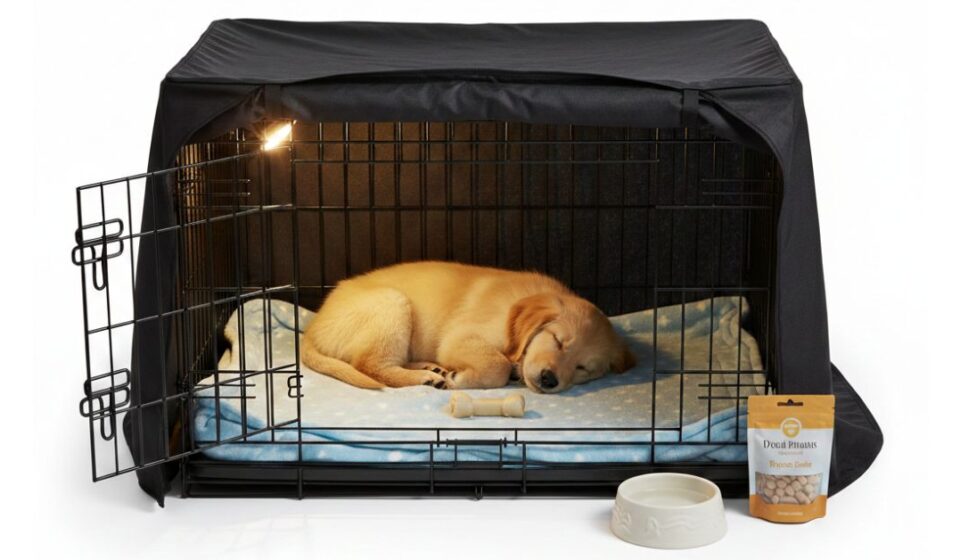
Crate Training a Puppy at Night: Proven Strategies for Peaceful Sleep and Faster Learning

Bringing a new puppy home often fills a household with excitement, energy, and a surprising amount of sleeplessness. The first few nights tend to test patience as a young dog adjusts to a new environment, unfamiliar sounds, and separation from littermates. Crate training a puppy at night quickly becomes one of the most discussed challenges among new dog owners.
A puppy does not instinctively understand that nighttime means uninterrupted rest. In fact, most young dogs have limited bladder control, heightened sensitivity to isolation, and a natural desire for closeness. Without a structured approach, puppy crying in crate scenarios can escalate, leading to frustration for both pet and owner. A consistent nighttime puppy routine is not simply about convenience. It establishes boundaries, security, and long term behavioral stability.
When handled correctly, crate training puppy at night accelerates house training, reduces anxiety, and promotes healthy sleep cycles. Research from organizations such as the American Kennel Club and the American Veterinary Medical Association highlights that dogs thrive on predictable routines and structured environments. A crate, when introduced positively, becomes a safe den rather than a place of confinement. The result is fewer accidents, less whining, and a calmer home environment.
Why Nighttime Crate Training Matters
The Biological Reality of Young Puppies
Puppies under sixteen weeks old have developing nervous systems and limited bladder control. Most can hold urine approximately one hour per month of age. An eight week old puppy typically needs a bathroom break every two to three hours overnight.
Expecting uninterrupted sleep too early often leads to frustration and confusion. A practical perspective reduces unrealistic expectations and prevents harsh responses to normal puppy behavior.
Crates Create Psychological Security
Dogs are den animals by instinct. A properly sized crate mimics the protective feel of a small enclosed space. This reduces environmental stimulation and promotes rest. When the crate is associated with safety rather than punishment, it becomes a refuge.
Crate training tips from behaviorists emphasize positive reinforcement, gentle introduction, and gradual duration increases. When these principles are followed, nighttime resistance decreases significantly.
Choosing the Right Crate Setup
Size and Structure
A crate should be large enough for the puppy to stand, turn, and lie down comfortably. However, excessive space encourages bathroom accidents in one corner while sleeping in another.
For growing breeds, adjustable dividers are practical. Materials may include wire crates for ventilation, plastic crates for a den like atmosphere, or soft sided crates for travel.
Bedding and Comfort
Soft bedding supports joint development and comfort. Avoid thick cushioning for puppies that chew excessively. A washable blanket often works well. Some puppies respond positively to a heartbeat toy or a warm water bottle wrapped in fabric to simulate litter warmth.
Location of the Crate
Placement matters. For the first few weeks, positioning the crate in the bedroom reduces separation anxiety. Hearing human breathing and subtle movement reassures the puppy. Gradual relocation can occur later if desired.
Building a Strong Nighttime Puppy Routine
Consistency is the foundation of successful puppy sleep training. Puppies respond best to predictable patterns.
Evening Activity
A calm but engaging play session one hour before bedtime helps release excess energy. Mental stimulation through basic commands such as sit and stay further promotes fatigue.
Avoid overstimulation immediately before bed. High intensity activity close to bedtime may increase alertness rather than relaxation.
Scheduled Feeding
Feeding the final meal at least three hours before bedtime allows digestion and reduces nighttime bathroom urgency. Fresh water access can be removed approximately one hour before sleep unless veterinary guidance suggests otherwise.
Final Bathroom Break
A quiet, distraction free potty trip immediately before crating is essential. Reward elimination outdoors with calm praise to reinforce house training.
Managing Puppy Crying in Crate
Puppy crying in crate situations are common during the first week. The key lies in distinguishing between genuine need and attention seeking behavior.
Assess Basic Needs First
If the puppy has recently eaten, eliminated, and exercised, persistent whining often reflects adjustment anxiety rather than discomfort.
However, young puppies may legitimately require one or two overnight bathroom breaks. Setting a gentle alarm reduces the chance of accidents and prevents reactive crying cycles.
Respond Strategically
Immediate response to every whine can reinforce the behavior. Instead, wait briefly to determine whether the puppy settles independently. If crying intensifies beyond a few minutes and a bathroom break is likely needed, take the puppy out calmly without play or excitement.
Interaction should remain neutral. This signals that nighttime is for elimination and rest, not entertainment.
Stop Puppy Whining Night: Practical Techniques
Gradual Desensitization
Short crate sessions during daytime build familiarity. Feeding meals inside the crate forms positive associations. Leaving the room briefly and returning calmly trains independence.
Sound Conditioning
Soft background noise such as white noise or low volume classical music can reduce sensitivity to household sounds. Research suggests consistent ambient sound may lower anxiety responses in dogs.
Covering the Crate
Draping a breathable blanket over part of a wire crate can create a den effect. Ensure adequate ventilation at all times.
Timeline Expectations
Every puppy progresses at a different pace. However, general patterns often follow this timeline:
| Puppy Age | Nighttime Expectation | Bathroom Frequency | Common Behavior |
|---|---|---|---|
| 8 Weeks | Adjustment phase | Every 2 to 3 hours | Frequent crying |
| 10 Weeks | Partial adaptation | Every 3 to 4 hours | Reduced whining |
| 12 Weeks | Improved bladder control | One break | Settling faster |
| 16 Weeks | Near full night sleep | Rarely needed | Minimal noise |
Patience during the first month yields long term stability.
Common Mistakes That Delay Progress
Inconsistent Schedule
Irregular feeding or bedtime disrupts internal rhythms. Puppies depend on routine for security.
Using the Crate as Punishment
Negative associations create resistance. The crate should never be linked to discipline.
Allowing Accidental Reinforcement
Responding with affection or play during nighttime whining strengthens the habit. Calm and neutral responses maintain boundaries.
Advanced Behavioral Insights
Separation Anxiety vs Normal Adjustment
Mild crying during early nights reflects environmental adjustment. Persistent panic, drooling, or frantic escape attempts may indicate deeper anxiety requiring professional evaluation.
Behavior specialists affiliated with organizations such as the American College of Veterinary Behaviorists emphasize early structure to prevent long term anxiety disorders.
The Role of Early Socialization
Exposure to various daytime stimuli builds confidence. Confident puppies adapt to crate routines more easily. Structured social experiences during the critical socialization window between three and fourteen weeks influence emotional resilience.
Supporting Healthy Puppy Sleep Training
Daytime Naps Matter
Overtired puppies become hyperactive and resistant to sleep. Scheduled daytime naps in the crate reinforce the idea that the crate is a rest space.
Monitor Sleep Duration
Young puppies sleep between eighteen and twenty hours per day. Disrupted sleep patterns often indicate overstimulation or inconsistent routines.
When Improvement Plateaus
If crate training puppy at night shows no progress after several weeks, reassessment is necessary. Evaluate crate size, daily exercise levels, and feeding timing. Environmental stressors such as loud traffic or inconsistent household activity may contribute.
In rare cases, persistent nighttime distress warrants consultation with a licensed veterinarian or certified behavior professional for assessment.
The Long Term Benefits
Successful nighttime crate training extends beyond sleep. It accelerates house training, reduces destructive behaviors, and strengthens trust. Puppies that view their crate as a secure retreat often demonstrate better impulse control and independence as adults.
Moreover, a structured nighttime puppy routine contributes to predictable daily rhythms. Dogs thrive on stability, and early investment in proper habits creates a foundation for lifelong behavioral health.
Final Thoughts on Peaceful Nights
Crate training a puppy at night demands patience, structure, and emotional consistency. Early setbacks are common, yet most difficulties stem from unrealistic expectations rather than true behavioral issues. Young puppies require guidance, predictable rhythms, and calm leadership.
A thoughtful nighttime puppy routine fosters independence while reinforcing security. When crying is managed strategically and positive crate associations are built carefully, resistance declines steadily. The process transforms restless evenings into restorative sleep for both puppy and household.
Over time, the crate evolves from a training tool into a sanctuary. The discipline established during these early weeks influences lifelong behavior, house training reliability, and emotional balance. Structured puppy sleep training, implemented with patience and clarity, produces measurable results and a harmonious living environment.
Frequently Asked Questions
1. How long does crate training puppy at night usually take?
Most puppies adapt within one to three weeks with consistent routine.
2. Should crying be ignored completely?
Brief whining can be ignored. Persistent crying that signals bathroom needs should be addressed calmly.
3. Is it harmful to let a puppy cry?
Short adjustment crying is normal. Prolonged distress requires reassessment of routine and comfort factors.
4. Where should the crate be placed at night?
Initially in the bedroom to reduce separation anxiety.
5. How many bathroom breaks are normal?
An eight week old puppy may require two breaks. By sixteen weeks, most sleep through the night.
6. Can treats help with crate training tips?
Yes. Positive reinforcement builds favorable crate associations.
7. What if the puppy refuses to enter the crate?
Gradual introduction using meals and toys encourages voluntary entry.
8. Does covering the crate help stop puppy whining night?
Partial covering may reduce stimulation and improve calmness.
9. When can nighttime confinement end?
Many dogs continue to prefer crates into adulthood as a safe space.
10. Is puppy sleep training different from house training?
They overlap. Nighttime structure supports bladder control and routine learning.