
Cats are widely known for their natural cleanliness and instinctive use of a litter box. That is why it can feel frustrating and confusing when a cat suddenly begins peeing outside the box or avoids it altogether. A cat not using litter box habits properly is not acting out of spite. Feline behavior is rooted in instinct, comfort, and subtle communication signals that often go unnoticed until a problem appears.
Litter box problems cats experience are usually tied to either environmental changes, behavioral stressors, or discomfort associated with the box itself. A shift in routine, a new household member, unfamiliar smells, or even the texture of litter can disrupt a pattern that once seemed perfectly stable. Cats are creatures of habit, and even small disruptions may lead to noticeable behavior changes.
Addressing the issue requires patience, observation, and a structured approach. Rather than assuming defiance, it is essential to examine patterns, stress signals, and the overall setup of the litter box environment. With thoughtful adjustments and awareness of feline psychology, most cases of cat peeing outside box habits can be corrected effectively.
Common Reasons Behind Litter Box Problems
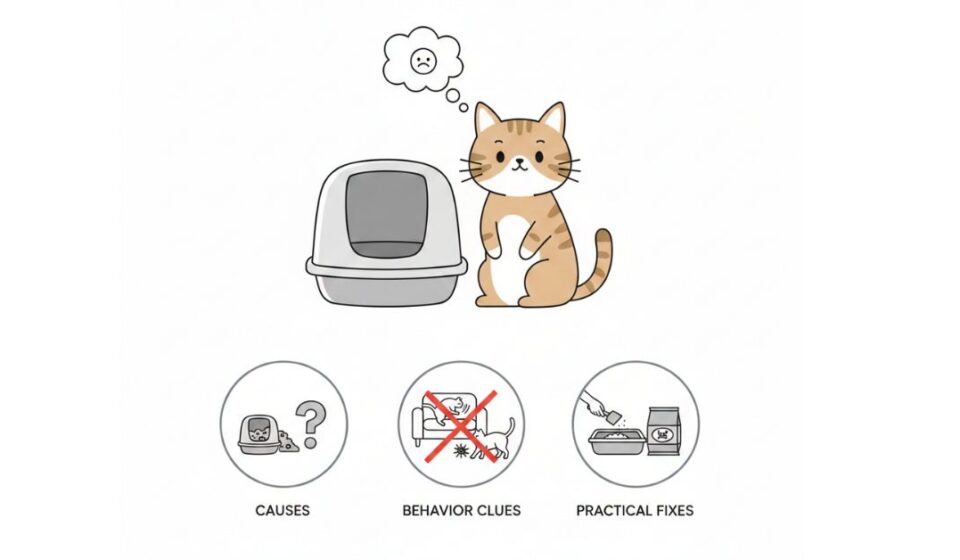
When a cat not using litter box becomes a pattern, the root cause typically falls into a few identifiable categories. These include environmental discomfort, stress urination cats experience, territory marking behavior, or learned avoidance.
Environmental Discomfort
Cats are highly sensitive to their surroundings. If the litter box is placed in a noisy or high traffic area, avoidance is common. Washing machines, vacuum cleaners, or loud appliances near the box can create negative associations. Poor ventilation or strong odors may also discourage use.
A sudden switch in litter brand, texture, or scent can be another trigger. Many cats prefer unscented, fine textured litter. Strong fragrances often deter them. Even changing from clumping to non clumping litter may disrupt established habits.
Stress and Anxiety
Stress urination cats exhibit is one of the most overlooked causes. Changes such as moving to a new home, introducing another pet, or rearranging furniture can trigger insecurity. Cats express stress through subtle behaviors before inappropriate elimination begins.
Signs of stress may include:
- Excessive grooming
- Hiding more than usual
- Reduced appetite
- Increased vocalization
- Territorial behavior
Stress affects elimination habits because the litter box represents vulnerability. A stressed cat may avoid a location that feels exposed or unsafe.
Territorial Marking
Not all cases of cat peeing outside box behavior involve the litter box itself. In multi cat households, marking can become a communication tool. Spraying or urinating near doors, windows, or new objects often signals territorial anxiety.
This behavior differs from simple avoidance. Marking is usually done on vertical surfaces and in small amounts. Identifying the pattern helps determine whether the issue relates to litter box problems cats experience or territory insecurity.
Learned Avoidance
If a cat has had a negative experience inside the box, such as being startled or feeling discomfort while eliminating, avoidance can develop. Cats quickly associate locations with unpleasant sensations. Once that connection forms, retraining may require gradual reintroduction.
The Psychology Behind Litter Box Habits
Understanding feline psychology is critical when addressing behavior correction cats need. Cats are instinctively drawn to soft, diggable surfaces. In natural environments, elimination involves burying waste to avoid predators and conceal scent.
A litter box replicates this instinct, but only if it aligns with the cat’s expectations. The following psychological factors influence behavior:
Safety Perception
Cats must feel secure while using the box. Open spaces with multiple escape routes often work better than enclosed or covered boxes in multi pet homes. A covered box may trap odors and limit visibility, increasing anxiety.
Cleanliness Standards
Cats have a heightened sense of smell. Even if a box appears clean to humans, lingering odor may discourage use. Scooping daily and replacing litter frequently reduces avoidance.
Routine Stability
Cats rely heavily on predictability. Feeding schedules, sleeping spots, and elimination habits form consistent cycles. Disrupting routine often leads to litter box problems cats show through avoidance.
Litter Box Setup That Encourages Consistency
One of the most effective strategies for correcting cat not using litter box issues involves refining the setup.
Number of Boxes
A general guideline suggests one box per cat plus one additional box. In a two cat household, three boxes reduce competition and territorial stress.
Ideal Placement
Litter box placement tips focus on quiet, low traffic areas. Avoid placing boxes near food and water bowls. Cats instinctively separate elimination from feeding spaces.
Basements, laundry rooms, or isolated corners may seem convenient, but accessibility matters. Older cats especially require easily reachable locations without stairs or obstacles.
Box Size and Style
The box should be large enough for the cat to turn around comfortably. High sides help prevent spillage but should not restrict entry for senior cats. Some cats dislike covered boxes due to confined space and trapped odor.
Litter Type
Fine grained, unscented clumping litter is often preferred. Gradual transitions between litter types prevent abrupt resistance.
Common Causes and Practical Responses
| Cause Category | Behavior Pattern | Practical Adjustment |
|---|---|---|
| Environmental discomfort | Avoids box entirely | Relocate to quiet area |
| Dirty box | Eliminates near box | Increase cleaning frequency |
| Stress urination cats show | Urinates in new locations | Stabilize routine and reduce stressors |
| Territorial marking | Sprays vertical surfaces | Increase box count and reduce competition |
| Litter texture change | Hesitates or scratches outside box | Revert to previous litter gradually |
Stress Urination Cats Experience
Stress urination cats display is often linked to change. Even minor household adjustments can alter scent patterns, which are vital to feline comfort.
Common Stress Triggers
- Moving residences
- Introducing new pets
- Renovation or furniture rearrangement
- Loud gatherings
- Changes in daily schedule
When these events occur, reinforcing familiarity becomes important. Maintaining feeding times and cleaning routines supports behavioral stability.
Behavioral Correction Cats Respond To
Behavior correction cats accept most readily is positive reinforcement. Punishment worsens anxiety and increases avoidance. Instead, reward consistent box use with praise and calm reassurance.
Using enzymatic cleaners for accidents eliminates odor traces that encourage repeat behavior. Standard household cleaners may leave scent markers detectable to cats.
Multi Cat Household Challenges
Homes with multiple cats experience higher rates of litter box problems cats face. Social hierarchy influences access to resources.
Resource Guarding
Dominant cats may block access to a box. Subordinate cats then seek alternative locations. Observing interaction patterns around the litter area provides insight.
Strategic Distribution
Place boxes in separate areas rather than clustering them together. Spacing reduces territorial tension and provides alternatives.
Aging Cats and Habit Changes
Senior cats may experience mobility limitations. Arthritis, reduced vision, or cognitive shifts can affect litter habits. Lower sided boxes and easily accessible placement help maintain consistency.
Behavioral changes in older cats should never be dismissed as stubbornness. Observing mobility and comfort levels is essential when assessing cat peeing outside box behavior in aging pets.
Cleaning and Odor Control
Odor management is often underestimated in litter box placement tips. Cats detect residual scent even after visible stains disappear.
Effective Cleaning Practices
- Scoop daily
- Replace litter fully every one to two weeks
- Wash box with mild unscented soap
- Avoid ammonia based cleaners
Enzymatic cleaners are particularly effective for removing accident spots. They break down odor molecules that standard cleaners may not eliminate fully.
Retraining a Cat to Use the Litter Box
When a cat not using litter box habits persists, retraining can be implemented systematically.
Step One: Restrict Space
Temporarily confine the cat to a quiet room with food, water, and a clean box. Smaller environments reduce confusion and reinforce correct habits.
Step Two: Gradual Expansion
Once consistent use resumes, slowly allow access to additional areas of the home.
Step Three: Reinforce Positively
Reward correct behavior with calm attention. Avoid scolding or startling.
Patience is critical. Abrupt reactions increase stress urination cats may exhibit.
When Patterns Suggest More Than Behavior
Although this discussion focuses on general behavioral causes, persistent litter avoidance may sometimes indicate discomfort. Behavioral observation should always precede assumptions. Not every case of cat peeing outside box behavior is rooted in attitude.
Signs that warrant closer observation include:
- Straining
- Frequent small eliminations
- Sudden behavior change
- Vocal distress while eliminating
Recognizing patterns early supports timely intervention.
Preventing Future Litter Box Problems
Prevention relies on consistency and attentiveness.
Maintain Routine
Feeding, cleaning, and play schedules should remain predictable.
Monitor Environmental Changes
Introduce new pets gradually. Rearrange furniture slowly when possible.
Provide Enrichment
Interactive play reduces stress urination cats display. Mental stimulation supports emotional balance.
Observe Behavior Subtly
Small changes in scratching, posture, or box hesitation often precede avoidance. Early detection prevents escalation.
Restoring Harmony at Home
A cat not using litter box habits properly is rarely random behavior. It reflects communication through action. Cats rely on environment stability, cleanliness, and security. When those elements shift, elimination patterns may follow.
Litter box problems cats encounter are often solvable through thoughtful observation and strategic adjustments. From litter box placement tips to managing stress urination cats exhibit, consistent care and environmental refinement create meaningful change. Behavior correction cats respond to most effectively centers on patience and positive reinforcement rather than reactionary measures.
Maintaining harmony requires attentiveness to small behavioral cues and a willingness to adapt the environment accordingly. With structured responses and an informed perspective on feline psychology, most households can restore reliable litter habits and prevent recurring cat peeing outside box behavior. Stability, cleanliness, and emotional security remain the cornerstones of lasting success.
Frequently Asked Questions
1. Why is a cat not using litter box suddenly?
Sudden changes often relate to stress, environment shifts, litter type changes, or discomfort with box placement.
2. How can litter box problems cats experience be identified early?
Increased hesitation, scratching outside the box, or eliminating near the box indicate early resistance.
3. Does litter type affect behavior?
Yes. Many cats prefer fine textured, unscented clumping litter.
4. What are effective litter box placement tips?
Place boxes in quiet, low traffic areas away from food bowls and loud appliances.
5. Why is a cat peeing outside box but still defecating inside?
This may signal marking behavior or stress rather than full box avoidance.
6. How does stress urination cats show differ from marking?
Stress urination often involves larger amounts on horizontal surfaces, while marking involves small sprays on vertical areas.
7. Can multiple cats share one box?
Sharing is possible but not ideal. One box per cat plus one extra reduces conflict.
8. How often should a litter box be cleaned?
Daily scooping and regular full litter replacement are recommended.
9. Can routine changes cause litter avoidance?
Yes. Cats rely heavily on predictable routines.
10. What is the most common cause of litter box problems cats face?
Environmental discomfort and stress are among the most frequent triggers.