
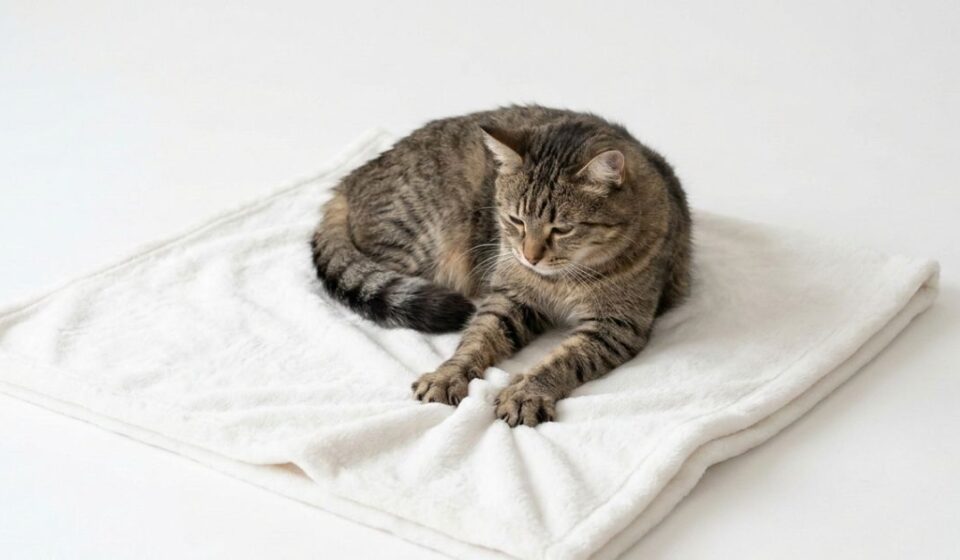

Cats often curl into a soft blanket, press their paws rhythmically into the fabric, and appear completely absorbed in the moment. The movement is slow, deliberate, and almost meditative. To many pet owners, it looks like a simple comfort ritual. Yet beneath this gentle motion lies a complex blend of instinct, memory, and communication that reaches back to early kittenhood.
The question why do cats knead blankets continues to intrigue veterinarians, behaviorists, and pet parents alike. This repetitive pressing, often called biscuit making cats by affectionate observers, reflects far more than a quirky personality trait. It represents a behavior deeply embedded in feline biology, shaped by survival patterns and reinforced by emotional association.
When examining cat kneading meaning, scientific research and behavioral observation reveal that kneading connects to nursing reflexes, scent marking, territory security, and emotional regulation. It is a natural kneading instinct that persists into adulthood. For most domestic cats, kneading is normal and healthy, offering insight into their internal state. Cat behavior explained through this lens highlights how small gestures can carry powerful evolutionary significance.
The Origins of the Kneading Instinct
Early Life Conditioning
The kneading instinct begins shortly after birth. Newborn kittens press their tiny paws against their mother’s abdomen to stimulate milk flow during nursing. This rhythmic motion activates the mammary glands, ensuring nourishment. Over time, the action becomes neurologically linked to safety, warmth, and maternal bonding.
Neuroscientific studies on mammalian imprinting indicate that early sensory experiences form durable neural pathways. In kittens, tactile stimulation paired with feeding strengthens the association between paw pressing and emotional comfort. Even after weaning, the behavior persists as a conditioned soothing mechanism.
Evolutionary Continuity
In wild feline ancestors, kneading served additional survival purposes. Wildcats often pressed down tall grass or foliage to create a soft resting area. This nesting behavior provided insulation, concealment, and protection from environmental hazards.
Domestic cats retain many ancestral traits. Although living indoors eliminates the need to prepare bedding from grass, the behavior remains encoded in instinctual patterns. Cat behavior explained from an evolutionary perspective shows that kneading is a behavioral echo of survival strategies.
Emotional Drivers Behind Kneading
Comfort and Security
One of the primary reasons why cats knead blankets is emotional regulation. The repetitive motion can lower stress responses and induce a relaxed state. Veterinary behaviorists often observe kneading during periods of contentment, such as after feeding or while resting in a familiar environment.
Kneading frequently accompanies purring. The combination signals deep relaxation. Research published in feline behavioral studies suggests that rhythmic movement paired with purring stimulates endorphin release, reinforcing calmness.
Attachment and Affection
Cats may knead on their owners’ laps as a display of trust. The action mirrors the comfort once associated with maternal care. When a cat kneads a blanket or a person, it often reflects emotional attachment rather than dependency.
The cat kneading meaning in this context relates to bonding behavior. Socially secure cats express affection through proximity and tactile engagement. Kneading is one such tactile expression.
Scent Marking and Territory
Pheromone Glands in the Paws
Cats possess scent glands located in the soft pads of their paws. Each time a cat presses into a blanket, microscopic amounts of pheromones are deposited onto the surface. These chemical signals are imperceptible to humans but significant to other cats.
This behavior transforms kneading into a subtle form of territory marking. By kneading blankets, beds, or cushions, cats create scent signatures that reinforce their sense of ownership and security.
Reinforcing Safe Spaces
Blankets often carry the familiar scent of the home environment. Kneading reinforces this scent profile, deepening the association between the object and safety. For anxious or recently relocated cats, kneading may increase as they attempt to stabilize their environment through scent marking.
Is kneading normal in such scenarios? Yes. Increased kneading can be a transitional coping strategy rather than a behavioral problem.
Why Blankets Are a Favorite Target
Texture and Tactile Feedback
Blankets offer soft resistance similar to fur or natural nesting materials. Plush fabrics provide optimal tactile feedback that satisfies the kneading instinct. The material’s flexibility allows the paws to sink in and rebound, enhancing sensory stimulation.
Cats often prefer fleece, wool, or thick cotton because these materials mimic the warmth and softness associated with early life experiences.
Warmth and Temperature Regulation
Cats seek warmth instinctively. Blankets retain body heat, making them ideal resting surfaces. Kneading before lying down may increase blood flow in the paws, contributing to overall relaxation.
The sensory combination of warmth, softness, and familiar scent creates a multi layered comfort experience.
Is Kneading Normal in Adult Cats?
Developmental Persistence
Many pet owners question whether adult kneading signals immaturity. Behavioral science indicates otherwise. While kneading originates in kittenhood, its continuation into adulthood is considered normal feline behavior.
Unlike certain juvenile reflexes that disappear over time, kneading persists because it serves ongoing emotional and territorial functions.
When Kneading Becomes Excessive
Although kneading is normal, context matters. Excessive kneading accompanied by anxiety, vocalization, or destructive behavior may warrant observation. Changes in frequency can reflect environmental stress or health concerns.
However, in most cases, kneading blankets remains a benign and comforting routine.
Behavioral Triggers That Encourage Kneading
Environmental Stability
Cats are creatures of habit. A predictable environment increases the likelihood of relaxed behaviors such as kneading. After meals, during evening quiet hours, or when settling for sleep, kneading often appears.
Hormonal Influences
Some unneutered cats may knead more frequently during hormonal fluctuations. However, kneading itself is not solely tied to reproductive behavior. It remains primarily a comfort driven action.
Scientific Insights Into Cat Behavior Explained
Modern veterinary research has expanded knowledge of feline emotional processing. Studies on feline stress responses show that repetitive motor actions can function similarly to self soothing behaviors in other mammals.
The following table summarizes key scientific interpretations of kneading behavior:
| Behavior Element | Biological Basis | Emotional Significance | Evolutionary Function |
|---|---|---|---|
| Rhythmic paw pressing | Nursing reflex pathway | Comfort and calm | Stimulating milk flow |
| Purring during kneading | Vibration induced endorphins | Deep relaxation | Social bonding signal |
| Blanket preference | Soft tactile feedback | Safety association | Nest preparation |
| Scent release from paws | Pheromone glands | Territorial security | Area marking |
These findings clarify that biscuit making cats behavior is neither random nor trivial. It integrates neurology, memory, and evolutionary adaptation.
Differences Between Kneading and Other Behaviors
Kneading Versus Scratching
Scratching sharpens claws and marks territory visually. Kneading, in contrast, involves gentle claw extension and rhythmic pressure. It is typically associated with rest rather than active marking.
Kneading Versus Digging
Some cats circle and paw at surfaces before lying down. While similar, digging focuses on creating a depression in the material. Kneading involves alternating paw movement in a steady rhythm.
Understanding these distinctions prevents misinterpretation of cat behavior explained through careful observation.
Cultural and Social Perception of Biscuit Making Cats
The phrase biscuit making cats has gained popularity in social media culture. Videos of cats kneading blankets often generate strong emotional reactions from viewers. This widespread fascination highlights the universal appeal of visible comfort behaviors in animals.
While the term is playful, the behavior remains rooted in biology rather than humor. Anthropomorphism can obscure the underlying science, but it also reflects the strong bond between humans and companion animals.
Psychological Comfort and Human Interaction
Mutual Relaxation
Interestingly, many owners report feeling calmer while observing their cats knead. The slow, repetitive motion may trigger mirror neuron responses in humans, promoting relaxation.
This reciprocal calming effect strengthens the human animal bond.
Encouraging Healthy Behavior
Providing designated soft blankets can support natural kneading without damage to furniture. Maintaining trimmed claws reduces accidental scratching during kneading sessions.
Is kneading normal enough to encourage? In most cases, yes. Supporting natural behaviors enhances feline well being.
When to Observe More Closely
While kneading is healthy, certain signs may require attention:
• Sudden increase paired with distress
• Compulsive chewing of fabric during kneading
• Behavioral changes such as withdrawal or aggression
Fabric chewing, sometimes associated with wool sucking, differs from kneading alone. Monitoring context helps distinguish between typical behavior and stress related actions.
The Lifelong Nature of the Kneading Instinct
Cats of all ages knead. Senior cats often knead more frequently as they seek comfort and warmth. The behavior can become especially prominent during rest cycles.
This lifelong persistence reinforces that the kneading instinct is not a temporary phase but a stable element of feline behavioral expression.
Final Thoughts
The simple act of a cat pressing its paws into a blanket reveals a profound connection between biology, memory, and emotional well being. The answer to why do cats knead blankets lies not in a single explanation but in an intricate web of instinctive behavior shaped by early development and evolutionary survival.
Kneading bridges the gap between kittenhood and adulthood, transforming a nursing reflex into a lifelong comfort ritual. Cat kneading meaning extends beyond sentimentality. It embodies territorial reinforcement, scent communication, stress regulation, and social bonding. Biscuit making cats behavior may appear charming on the surface, yet it reflects sophisticated neurological pathways and adaptive traits preserved across generations.
Is kneading normal? Absolutely. It stands as one of the clearest examples of how domestic cats maintain ancestral instincts within modern homes. Observing kneading offers valuable insight into feline emotional states and strengthens appreciation for the subtle complexity of cat behavior explained through science.
In the quiet rhythm of pressing paws against a soft blanket, centuries of evolution unfold in a moment of calm. That gentle motion, repeated countless times, affirms the deep rooted instincts that continue to define the feline experience.
Frequently Asked Questions
1. Why do cats knead blankets specifically?
Blankets provide soft resistance and warmth that mimic early life comfort. The texture enhances tactile satisfaction.
2. What is the cat kneading meaning in adult cats?
In adults, kneading represents comfort, territorial marking, and emotional bonding rather than nursing dependency.
3. Is kneading normal in all cat breeds?
Yes. Kneading appears across breeds because it stems from universal feline instincts.
4. Why do some cats drool while kneading?
Drooling can occur during intense relaxation, similar to how kittens behaved during nursing.
5. Do male and female cats knead differently?
There is no consistent gender based difference. Both display the behavior similarly.
6. Can kneading indicate stress?
Mild kneading reflects comfort. Excessive or frantic kneading paired with anxiety may indicate stress.
7. Why do cats knead people?
Kneading people signals trust and affection. The cat associates the person with safety.
8. Is kneading related to claw maintenance?
Not primarily. While claws may extend slightly, the main purpose is emotional comfort.
9. Should kneading be discouraged?
Generally no. It is natural and beneficial. Gentle redirection may help if it causes discomfort.
10. Do wild cats knead?
Wild felines prepare nesting areas by pressing down vegetation, reflecting a related ancestral behavior.