
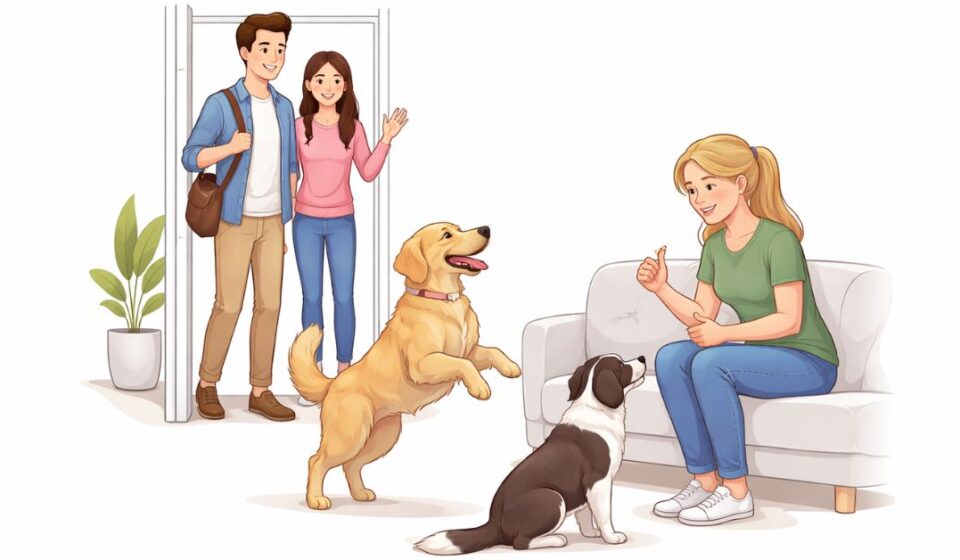

A dog rushing to the door with enthusiasm can feel heartwarming at first. The wagging tail, bright eyes, and full body excitement reflect affection and loyalty. Yet when that excitement turns into leaping on guests, scratching clothing, knocking over children, or startling visitors, the behavior quickly shifts from charming to problematic. Many households struggle with this issue, especially in homes with social dogs that thrive on human interaction.
Jumping often reflects a natural canine impulse rather than aggression. Dogs greet face to face in social settings, and vertical movement helps them reach human attention. However, allowing this behavior reinforces a pattern that becomes stronger over time. When guests respond with laughter, eye contact, or physical touch, even in mild frustration, the dog interprets it as reward.
Stopping dog jumping on guests requires more than simple correction. Effective dog greeting behavior training blends impulse control, environmental management, consistent cues, and reinforcement of calm alternatives. Structured training reshapes behavior patterns while preserving the dog’s confidence and sociability. With clarity and consistency, households can create calm dog techniques that transform chaotic door greetings into controlled and polite interactions.
Why Dogs Jump on Guests
Understanding the motivation behind jumping provides clarity for behavior modification. Jumping is not dominance or defiance. It is typically driven by excitement, attention seeking, or lack of impulse control.
Excitement and Social Reinforcement
Dogs are social mammals. When guests arrive, the sudden shift in environment triggers arousal. Elevated heart rate, adrenaline release, and anticipation of interaction create a surge of energy. Jumping becomes a fast outlet for that energy.
If guests respond verbally or physically, the dog receives reinforcement. Even pushing the dog away may feel like play. Over time, this strengthens the behavior loop.
Attention Seeking Patterns
Many dogs learn early that jumping leads to petting. If a puppy jumps and receives affection, that behavior becomes embedded. Behavioral science shows that rewarded actions increase in frequency. This principle applies strongly to greeting behavior.
Lack of Impulse Control
Impulse control is a learned skill. Dogs that have not been taught structured calm behavior struggle to regulate excitement. Without dog impulse control training, jumping becomes the default response.
The Psychology Behind Greeting Behavior
Dog greeting behavior training works best when grounded in behavioral science. Two key principles drive success.
Operant Conditioning
Operant conditioning explains how behavior changes based on consequences. If jumping results in attention, the behavior strengthens. If calm behavior results in attention while jumping produces none, the pattern shifts.
Threshold Management
A threshold is the point where a dog becomes too excited to respond to cues. Training must occur below that threshold. Practicing calm behavior when stimulation is low improves success when guests arrive.
The Cost of Ignoring Jumping
Many families tolerate jumping until it becomes disruptive. However, the consequences extend beyond inconvenience.
| Impact Area | Potential Consequence |
|---|---|
| Safety | Children or elderly guests may fall |
| Property | Clothing tears or muddy marks |
| Liability | Guests feel uncomfortable or fearful |
| Behavior Escalation | Increased arousal over time |
| Training Difficulty | Reinforced habit becomes harder to reverse |
Consistent jumping can escalate in intensity. What begins as light hopping may develop into forceful lunging. Addressing the issue early produces better outcomes.
Foundation Rules Before Training Begins
Stopping dog jumping on guests requires structure. Several rules must remain consistent across all household members.
Rule One: No Attention for Jumping
No eye contact, no talking, no pushing. Even negative engagement reinforces the action. Guests must cooperate in this strategy.
Rule Two: Reward Four Paws on the Floor
Attention only comes when all four paws remain grounded. Calm standing or sitting earns praise or gentle petting.
Rule Three: Practice Without Guests First
Training should not begin during high intensity door arrivals. Rehearse scenarios gradually.
Step by Step Plan to Stop Dog Jumping on Guests
Step One: Teach a Reliable Sit Cue
A solid sit command creates an alternative behavior. Begin in low distraction settings. Reward immediate compliance with treats or praise.
Gradually increase distractions. Reinforce calm posture consistently.
Step Two: Leash Management at the Door
During early stages, attach a leash before opening the door. The leash prevents lunging and allows controlled redirection.
Step Three: Create a Designated Greeting Spot
Place a mat or bed near the entry. Teach the dog to go to that spot when the doorbell rings. This becomes a predictable routine.
Step Four: Controlled Guest Practice
Invite cooperative friends for practice sessions. Instruct them to ignore jumping completely. Only greet the dog when calm behavior appears.
Dog Impulse Control Training Techniques
Impulse control reduces reactive responses and builds composure.
Wait Training
Teach the dog to wait before exiting doors or receiving treats. This builds patience and responsiveness.
Place Command
The place command directs the dog to a specific area. Remaining there until released strengthens self regulation.
Delayed Reward Exercises
Hold a treat in view and reward only when calm behavior persists. This reinforces emotional stability.
Calm Dog Techniques That Work
Calm dog techniques focus on lowering arousal rather than suppressing energy.
Structured Exercise Before Guests Arrive
Physical activity reduces excess energy. A brisk walk or play session prior to expected visitors can lower excitement.
Mental Stimulation
Puzzle toys and scent games engage the brain and reduce hyperactivity.
Controlled Breathing Environment
Maintaining a quiet environment at arrival time supports calmer behavior. Loud greetings amplify excitement.
Jumping Prevention Tips for Long Term Success
Consistency transforms training into habit.
Maintain Clear Household Communication
All family members must follow the same protocol. Mixed signals delay progress.
Avoid Accidental Reinforcement
Do not pet or praise while the dog is partially upright. Precision matters.
Gradual Exposure to Different Guests
Introduce a variety of people to generalize calm behavior. Dogs must learn the rule applies universally.
Common Mistakes in Dog Greeting Behavior Training
Using Physical Punishment
Physical correction increases stress and may damage trust. It does not teach alternative behavior.
Inconsistent Enforcement
Allowing jumping sometimes confuses the learning process.
Skipping Practice Sessions
Skill development requires repetition. Occasional correction is insufficient.
Advanced Obedience Correction Tips
When basic methods plateau, structured obedience correction tips enhance progress.
Variable Reinforcement Schedule
Once the dog reliably sits, begin rewarding intermittently. This strengthens persistence.
Desensitization to Doorbell Sound
Play doorbell recordings at low volume during training sessions. Pair the sound with calm behavior.
Controlled Social Exposure
Short frequent greetings build stability more effectively than rare long visits.
Breed and Age Considerations
Different breeds display varying energy levels. Herding and sporting breeds often show heightened enthusiasm. Puppies naturally exhibit more jumping behavior than adult dogs.
Senior dogs may jump due to cognitive shifts or attention seeking. Tailored training intensity ensures effectiveness without stress.
Measuring Progress
Progress can be evaluated through specific indicators.
| Training Indicator | Desired Outcome |
|---|---|
| Response Time | Immediate sit upon cue |
| Duration of Calm | Sustained composure for thirty seconds |
| Reduced Leash Tension | Minimal pulling at door |
| Guest Feedback | Positive comfort levels |
| Consistency Across Visitors | Stable behavior with new people |
Tracking improvements provides motivation and clarity.
When Professional Support May Help
If jumping includes aggressive signals such as growling or snapping, consultation with a certified trainer or behavior specialist may be appropriate. Professional evaluation ensures safety and structured intervention.
Building a Calm Household Culture
Stopping dog jumping on guests is not solely about door etiquette. It reflects broader impulse control and communication between dog and owner. Calm routines, predictable boundaries, and consistent expectations create emotional balance.
Dogs thrive in structured environments. Clear rules reduce anxiety because the dog understands what behavior earns attention. Over time, calm greetings become automatic.
A Calm Greeting Reflects Structured Training
A dog greeting guests politely communicates stability, confidence, and discipline. Stopping dog jumping on guests is not achieved through shouting or force. It emerges from consistent reinforcement of calm alternatives, strategic impulse control training, and clear boundaries.
Over time, guests enter the home without chaos. Four paws remain grounded. The dog waits for invitation rather than demanding attention. This transformation builds stronger trust between the dog and household members while enhancing safety and comfort for visitors. With structured dog greeting behavior training and practical jumping prevention tips, lasting behavior change becomes achievable and sustainable. The result is not suppression of personality, but refinement of social manners that allow enthusiasm to coexist with composure.
Frequently Asked Questions
1. Why does a dog keep jumping even after correction?
Jumping persists when it continues to receive reinforcement. Even small amounts of attention maintain the behavior.
2. How long does it take to stop dog jumping on guests?
Most dogs show improvement within several weeks of consistent practice. Habit strength and age influence the timeline.
3. Should guests give treats when greeting?
Only if the dog is calm. Treats must reinforce desired behavior, not excitement.
4. Is jumping a dominance behavior?
In most cases, jumping reflects excitement and attention seeking rather than dominance.
5. Can older dogs learn calm greeting behavior?
Yes. Dogs of any age can learn through consistent reinforcement and impulse control exercises.
6. Does ignoring the dog always work?
Ignoring works when applied consistently. Partial attention undermines results.
7. Are certain breeds harder to train?
High energy breeds may require more structured exercise and repetition, but training principles remain the same.
8. Should the dog be crated during guest visits?
Temporary confinement can help during early training stages but should not replace behavior modification.
9. What if children encourage jumping?
All household members must follow the same rules. Education is essential for success.
10. Can excitement ever be fully eliminated?
Excitement is natural. The goal is controlled expression rather than elimination.