
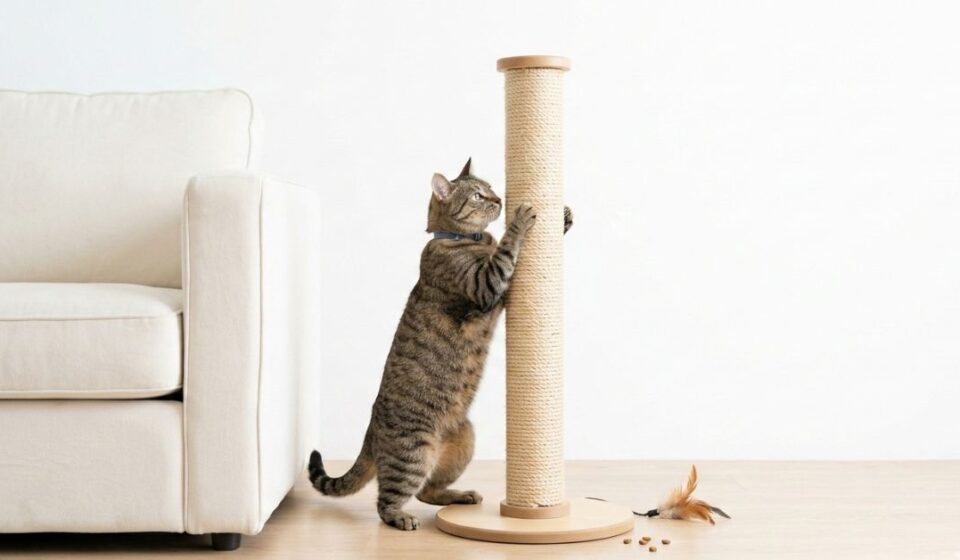

Cats bring comfort, personality, and quiet companionship into a home. Yet few habits test patience more than shredded sofas, clawed armrests, and torn curtains. Scratching is not a sign of defiance or misbehavior. It is an instinct deeply rooted in feline biology. When this natural behavior clashes with modern furniture, frustration often follows.
Many households search for ways to stop cat scratching furniture without harming the bond between pet and owner. The solution rarely lies in punishment. Instead, it requires a blend of environmental adjustment, scratching post training, and subtle cat behavior correction techniques that respect natural instincts.
Successful cat scratching solutions focus on redirection rather than restriction. When the environment supports appropriate scratching surfaces and the cat receives clear behavioral cues, furniture damage can be reduced dramatically. With the right approach, homes remain intact while cats continue expressing healthy behaviors.
Why Cats Scratch in the First Place
Understanding scratching behavior is the foundation of effective furniture protection tips.
Instinct, Not Rebellion
Scratching serves several biological and psychological functions:
- Removal of the outer layer of the claw sheath
- Stretching of back and shoulder muscles
- Marking territory visually and through scent glands in the paws
- Stress release and emotional regulation
According to the American Veterinary Medical Association, scratching is a normal feline behavior and should not be suppressed entirely. Attempts to eliminate scratching often lead to stress or the development of alternative unwanted behaviors.
Territorial Communication
Cats communicate through scent and sight. When claws drag across fabric or wood, scent glands located in the paws deposit pheromones. The visible scratch marks reinforce territory ownership. In multi cat households, this marking behavior can increase.
Emotional Regulation
Research from the American Society for the Prevention of Cruelty to Animals indicates that environmental stressors such as changes in routine, new pets, or relocation may increase scratching frequency. Scratching functions as a coping mechanism.
Stopping cat scratching furniture effectively requires respecting these motivations while redirecting the behavior.
The Real Cost of Ignoring Scratching
Uncontrolled scratching does more than damage upholstery. It can create tension between household members and affect the relationship with the pet.
Financial Impact
Replacing furniture can cost hundreds or thousands of dollars. Repairing leather and fabric upholstery may require professional restoration services. In rental properties, claw damage may result in forfeited security deposits.
Behavioral Escalation
Punishment based responses such as yelling or physical correction often lead to anxiety. An anxious cat may scratch more frequently, creating a cycle of frustration. Humane cat behavior correction focuses on reinforcement and environmental change rather than fear.
Building the Right Scratching Environment
Furniture protection tips begin with offering better alternatives.
Scratching Post Placement Matters
Scratching posts must compete successfully with furniture. Placement is critical.
- Position posts near furniture that is already targeted
- Place one near sleeping areas since cats often scratch after waking
- Use multiple posts in multi room homes
Vertical posts should be tall enough for a full stretch. Horizontal scratchers should be sturdy and wide.
Material Preferences
Cats show individual preferences for materials:
| Material Type | Texture | Best For | Notes |
|---|---|---|---|
| Sisal rope | Coarse | Aggressive scratchers | Durable and long lasting |
| Cardboard | Corrugated | Light to moderate scratchers | Affordable and replaceable |
| Carpet | Soft | Cats used to carpeted surfaces | Avoid matching furniture fabric |
| Wood | Natural grain | Outdoor oriented cats | Durable option |
Observing which furniture texture attracts scratching can guide selection.
Scratching Post Training That Works
Training is not about force. It is about making the preferred option more rewarding.
Positive Reinforcement
Reward the cat immediately after using the scratching post. Rewards may include:
- Verbal praise
- Gentle petting
- Playtime
- Small treats
Consistency strengthens the association.
Make Furniture Less Appealing
Furniture protection tips often include temporary deterrents such as:
- Double sided adhesive strips
- Plastic furniture guards
- Aluminum foil on targeted spots
These surfaces feel unpleasant to scratch without causing harm. Over time, the scratching post becomes the preferred texture.
Scent Attraction
Catnip can increase interest in a new scratching post. A light sprinkle on the surface may encourage exploration and engagement.
Strategic Furniture Protection
Even with training, additional preventive measures help prevent claw damage.
Trim Claws Regularly
Routine nail trimming reduces damage severity. Trimming does not eliminate scratching but lessens its impact.
Rearrange Furniture
Sometimes a couch positioned near a window or entryway becomes a territorial marker. Moving furniture or adding a scratching post nearby often reduces unwanted behavior.
Protective Covers
Slipcovers, washable throws, and fitted furniture protectors provide an additional barrier during training periods.
Addressing Behavioral Triggers
If scratching intensifies suddenly, underlying stressors may be present.
Environmental Changes
Events that may increase scratching include:
- New pets
- Moving homes
- Changes in work schedules
- New furniture
Gradual introductions and stable routines reduce stress related scratching.
Multi Cat Dynamics
In homes with multiple cats, competition for territory may escalate scratching. Providing multiple scratching posts in separate zones decreases territorial tension.
Declawing Is Not a Solution
Declawing is a surgical amputation of the last bone of each toe. The American Veterinary Medical Association recognizes that declawing can lead to chronic pain, behavioral changes, and litter box avoidance.
Many states and municipalities in the United States have restricted or banned declawing procedures. Humane cat scratching solutions prioritize environmental management rather than surgical intervention.
Psychological Techniques for Cat Behavior Correction
Behavior modification relies on consistency and calm responses.
Redirect Immediately
When scratching begins on furniture, calmly move the cat to the scratching post. Avoid shouting or startling. Calm redirection builds clarity.
Maintain Routine
Cats thrive on predictability. Feeding, playtime, and rest schedules should remain consistent. Structured play sessions also reduce pent up energy that may otherwise manifest as scratching.
Interactive Play
Daily interactive play sessions using wand toys or simulated prey objects reduce boredom. Mental stimulation decreases the likelihood of destructive behaviors.
Advanced Furniture Protection Tips
For persistent cases, layered strategies work best.
Use Vertical Space
Installing cat trees or wall mounted climbing shelves provides alternative territory markers. Elevated platforms satisfy natural climbing instincts.
Texture Modification
If a cat repeatedly targets one fabric type, replacing that fabric with less scratchable material may help. Microfiber and tightly woven fabrics resist claw penetration better than loosely woven textiles.
Pheromone Diffusers
Synthetic calming pheromone diffusers may reduce anxiety related scratching. These devices mimic natural feline facial pheromones associated with comfort.
Special Considerations for Kittens
Kittens learn quickly. Early scratching post training establishes long term habits.
Early Introduction
Provide scratching surfaces as soon as a kitten enters the home. Encourage use through play and gentle guidance.
Short Attention Spans
Kittens respond best to brief, frequent training moments rather than long sessions.
Measuring Progress
Behavioral change requires patience.
Signs of progress include:
- Increased use of scratching posts
- Reduced intensity of furniture scratching
- Shorter scratching sessions on inappropriate surfaces
Complete elimination may not occur, but significant reduction is achievable.
When Professional Advice May Be Needed
If scratching becomes obsessive or is accompanied by aggression or excessive anxiety, consultation with a licensed veterinarian or certified animal behavior specialist may be appropriate. General behavioral guidance can resolve most cases, but severe stress behaviors sometimes require individualized evaluation.
Creating Harmony Between Instinct and Interior
Stopping furniture damage requires balance rather than control. Scratching is woven into feline identity, serving physical, emotional, and territorial needs. Attempts to eliminate it entirely often disrupt the trust between pet and owner. Strategic redirection respects instinct while protecting living spaces.
The most effective approach combines scratching post training, consistent positive reinforcement, and smart environmental design. When scratching surfaces outcompete sofas in texture and placement, behavior shifts naturally. Layered furniture protection tips such as deterrent textures and protective covers provide additional safeguards during the transition phase.
Homes thrive when pets and people coexist without tension. By focusing on humane cat scratching solutions and thoughtful cat behavior correction, households can prevent claw damage while preserving the warmth and companionship that make feline ownership rewarding. Patience, consistency, and environmental awareness form the foundation of lasting success.
Frequently Asked Questions
1. Why does a cat scratch the same couch repeatedly?
The location likely serves as a territorial marker or preferred texture. Providing a similar textured scratching post nearby often reduces repetition.
2. Do scratching posts really stop cat scratching furniture?
Yes, when properly placed and reinforced with positive training. Scratching post training is one of the most effective cat scratching solutions.
3. How long does it take to stop cat scratching furniture?
Behavioral improvement may appear within weeks, but consistent reinforcement over several months ensures lasting results.
4. Are claw caps effective?
Soft claw caps can reduce damage temporarily but do not replace training. Proper application and monitoring are important.
5. Does trimming nails stop scratching?
Trimming reduces damage but does not eliminate the instinct to scratch.
6. Can stress increase scratching?
Yes. Environmental changes and social tension often increase scratching frequency.
7. Is punishment effective?
Punishment increases anxiety and may worsen scratching. Positive reinforcement methods are recommended.
8. What is the best scratching material?
Sisal rope and corrugated cardboard are widely preferred, though individual cats vary.
9. Should multiple posts be provided?
Yes. Multiple posts in different areas improve success, especially in multi cat homes.
10. Can furniture ever be fully protected?
With consistent scratching post training and layered furniture protection tips, damage can be significantly minimized.