

Walking a dog should feel steady and controlled, yet many pet owners experience daily tension at the end of the leash. The moment the door opens, excitement surges, and what begins as a simple outing turns into a physical struggle. Persistent pulling is not simply inconvenient. It strains the shoulders, increases the risk of injury, and can make even short walks exhausting.
Pulling behavior often reflects natural instincts rather than stubbornness. Dogs move faster than humans, react quickly to scent and sound, and become stimulated by movement in the environment.
Without structured guidance, they learn that pulling gets them closer to what they want. Over time, this habit becomes reinforced and deeply ingrained.
Learning how to stop dog pulling on leash requires clarity, patience, and consistent leash training techniques. Effective dog walking training is built on communication, timing, and positive reinforcement rather than force. With the right approach, even strong pullers can learn to walk calmly at a handler’s side, creating safer and more enjoyable daily routines.
Why Dogs Pull on the Leash
Instinct Drives Movement
Dogs are naturally faster than humans. An average adult dog can comfortably trot at speeds that require a human to jog. When restrained by a leash, instinct often overrides structure. Movement toward an interesting stimulus becomes the priority.
Pulling is frequently reinforced unintentionally. If a dog pulls toward a tree, another dog, or a scent, and eventually reaches it, the pulling behavior is rewarded. This repetition strengthens the association between tension on the leash and access to desired outcomes.
Excitement and Environmental Stimulation
Outdoor environments are rich with sensory input. Smells, sounds, motion, and unfamiliar stimuli activate curiosity and arousal. Without structured dog obedience leash work, many dogs struggle to regulate this excitement.
Research in canine behavior science indicates that arousal reduces impulse control. When excitement rises, the ability to respond to cues decreases. This is why structured leash training techniques must begin in low distraction environments before advancing to busy streets or parks.
Lack of Clear Guidance
Many dogs are never taught how to walk on a loose leash. They are simply expected to figure it out. In the absence of training, dogs default to forward momentum.
Clear expectations must be taught deliberately. Loose leash training tips focus on showing the dog exactly where to walk and what earns reward. Consistency creates clarity.
The Science Behind Loose Leash Walking
Behavior Is Reinforced by Outcomes
Behavioral psychology demonstrates that actions followed by positive outcomes are likely to repeat. When pulling results in forward progress, the behavior is strengthened.
Conversely, when pulling stops forward movement, and calm walking restores progress, the dog learns that loose leash behavior is more effective. This principle forms the foundation of successful dog walking training.
Tension Creates Opposition
Dogs have a natural opposition reflex. When they feel pressure, they instinctively pull against it. Constant leash tension can therefore increase resistance.
Loose leash training techniques aim to minimize tension. Instead of relying on force, they use strategic pauses, direction changes, and rewards to guide behavior.
Core Principles to Stop Leash Pulling Fast
Clarity
The dog must clearly understand what position is desired. Typically, this means walking beside the handler with a slack leash.
Consistency
Rules must remain the same on every walk. Inconsistent reinforcement slows progress.
Timing
Rewards and corrections must occur immediately after the behavior. Delayed responses confuse the learning process.
Patience
Stopping leash pulling fast is possible with structure, but sustainable results require repetition and calm leadership.
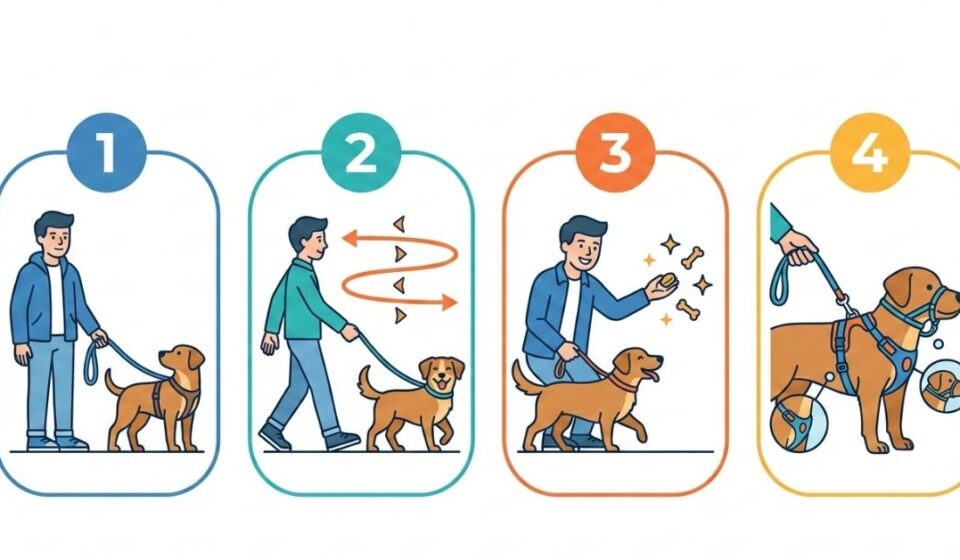
Step by Step Leash Training Techniques
Step One: Begin Indoors
Start in a distraction free environment. Attach the leash and reward the dog for standing calmly. Take a few steps forward. If the leash remains loose, mark the behavior with praise and offer a small treat.
Repeat until the dog associates slack leash with positive feedback.
Step Two: Stop When Pulling Begins
The moment tension appears, stop moving. Do not yank the leash. Stand still and wait for the dog to release pressure by stepping back or turning.
When the leash slackens, immediately move forward again. This teaches that forward motion only happens when the leash is loose.
Step Three: Change Direction Frequently
Sudden direction changes encourage focus. If the dog surges ahead, calmly pivot and walk in the opposite direction.
The dog learns to monitor movement and stay attentive. This is one of the most effective loose leash training tips for energetic dogs.
Step Four: Reward Position
Deliver rewards near the leg where walking is expected. This builds a strong positional habit. Over time, food rewards can be gradually reduced and replaced with praise.
Common Pulling Triggers and Practical Solutions
| Trigger | Why It Happens | Effective Response | Long Term Strategy |
|---|---|---|---|
| Other dogs | High excitement and social drive | Increase distance and reward calm focus | Practice exposure at safe distance |
| Strong scents | Natural scent tracking instinct | Pause and redirect attention | Incorporate structured sniff breaks |
| Fast walking pace | Dog moves faster naturally | Slow pace deliberately | Maintain consistent speed |
| Lack of exercise | Excess stored energy | Provide pre walk play session | Build daily exercise routine |
| Inconsistent rules | Mixed signals from handler | Standardize training approach | Maintain predictable expectations |
Building Reliable Dog Obedience Leash Skills
Introduce Focus Commands
A reliable focus cue enhances control. Teach the dog to make eye contact on command. Begin indoors and reinforce frequently.
During walks, use this cue when distractions appear. Reward compliance immediately. Focus work strengthens impulse control and reduces reactive pulling.
Gradual Exposure to Distractions
Transition from quiet areas to moderately busy environments. Avoid overwhelming situations early in training.
Behavior specialists emphasize incremental exposure. When difficulty increases too quickly, regression often follows.
Equipment Considerations
Standard Flat Collar
Suitable for dogs that respond quickly to training. Works best when combined with consistent loose leash methods.
Front Attachment Harness
Redirects forward motion by turning the dog slightly when pulling occurs. Useful for strong dogs during early stages of training.
Head Halter
Provides enhanced directional control. Requires gradual conditioning to ensure comfort and compliance.
Training remains the primary solution. Equipment supports technique but does not replace structured dog walking training.
Preventing Regression
Avoid Inconsistent Reinforcement
Allowing pulling occasionally resets progress. If forward movement occurs while pulling, the behavior strengthens again.
Maintain Structured Walks
Even after improvement, continue reinforcing calm leash behavior periodically. Random rewards sustain performance.
Address Energy Levels
High energy dogs may require additional physical and mental stimulation. Puzzle feeders, obedience drills, and structured play reduce excess excitement during walks.
Special Considerations for Puppies
Puppies learn quickly but have limited impulse control. Short sessions produce better results than long walks.
Introduce leash exposure early to normalize the sensation. Use gentle guidance and frequent rewards.
Early dog obedience leash work prevents long term pulling habits from forming.
Addressing Reactive Pulling
Some dogs pull due to fear or overstimulation. Reactive behavior requires careful management.
Increase distance from triggers and reinforce calm observation. Avoid forcing proximity to stressful stimuli.
In more severe cases, consultation with a certified canine behavior professional may be beneficial for structured assessment.
Mistakes That Slow Progress
Constant Tension
Keeping the leash tight eliminates the opportunity for the dog to learn self regulation.
Harsh Corrections
Physical punishment increases anxiety and may intensify pulling.
Lack of Engagement
Walks should not be purely mechanical. Verbal interaction and structured cues maintain attention.
Advanced Loose Leash Training Tips
Variable Reinforcement
Once progress stabilizes, reward unpredictably. This strengthens long term compliance.
Pattern Interrupts
Incorporate brief obedience cues such as sit or focus at random intervals. This resets attention and prevents forward fixation.
Structured Sniff Breaks
Allow designated sniffing periods after several minutes of calm walking. This balances instinct and control.
Measuring Progress
Improvement can be evaluated through objective markers:
- Reduction in leash tension
- Increased eye contact
- Faster response to stop cue
- Ability to pass distractions calmly
Documenting changes over weeks highlights progress and reinforces consistency.
The Emotional Impact of Calm Walking
Leash pulling creates frustration for both dog and handler. Tension often escalates into impatience, which disrupts communication.
Calm, structured walks foster trust and confidence. The dog learns predictability, while the handler experiences physical ease and improved safety.
Studies in companion animal behavior show that structured training strengthens the human animal bond. Walking becomes a cooperative activity rather than a struggle for control.
Long Term Behavior Transformation
Sustainable change occurs through repetition, clarity, and reinforcement. Dogs thrive on predictable patterns.
Learning how to stop dog pulling on leash is not about dominance or control. It is about communication, structure, and consistency. When expectations are clear and rewards are meaningful, behavioral adjustment follows naturally.
With steady application of leash training techniques, calm walking transitions from a training goal to a habitual behavior. The leash becomes a guide rather than a restraint.
Conclusion
Calm leash walking reflects communication, patience, and deliberate structure rather than force. Pulling behavior develops through repetition and unintentional reinforcement, yet it can be reshaped through consistent dog walking training grounded in behavioral science. Clear expectations, strategic pauses, direction changes, and meaningful rewards collectively form a reliable framework for change.
Stopping leash pulling fast becomes achievable when forward motion depends entirely on slack leash behavior. Dogs adapt quickly when outcomes are predictable and fair.
Over time, structured loose leash training tips transform daily outings into controlled and cooperative experiences. Physical strain diminishes, confidence grows, and the relationship between dog and handler strengthens.
Reliable dog obedience leash skills are not built overnight, but steady application produces lasting results. Calm walking becomes the default behavior rather than the exception. With disciplined repetition and structured reinforcement, every walk can shift from tension to balance, replacing frustration with control and mutual trust.
Frequently Asked Questions
1. How long does it take to stop dog pulling on leash?
Time varies based on age, consistency, and temperament. Many dogs show improvement within several weeks of daily structured training.
2. Can leash pulling be corrected in older dogs?
Yes. Older dogs can learn new behaviors with consistent reinforcement and clear guidance.
3. Should treats always be used?
Treats are effective during initial training. Gradually reduce frequency once reliable behavior develops.
4. Does a harness stop pulling automatically?
A harness may reduce strain but does not eliminate pulling without training.
5. Why does pulling increase near home?
Excitement rises as dogs anticipate arrival. Slow pace and reinforce calm behavior during final stretch.
6. Is pulling a sign of dominance?
Pulling typically reflects excitement or lack of training rather than dominance.
7. Can stopping leash pulling improve obedience overall?
Yes. Structured leash work strengthens focus and impulse control, supporting broader obedience skills.
8. How often should training sessions occur?
Short daily sessions are most effective. Consistency is more important than duration.
9. What if progress stalls?
Reduce distractions temporarily and reinforce basics before increasing difficulty again.
10. Is professional training necessary?
Many cases improve with structured home training. Complex behavioral issues may benefit from certified professional guidance.