
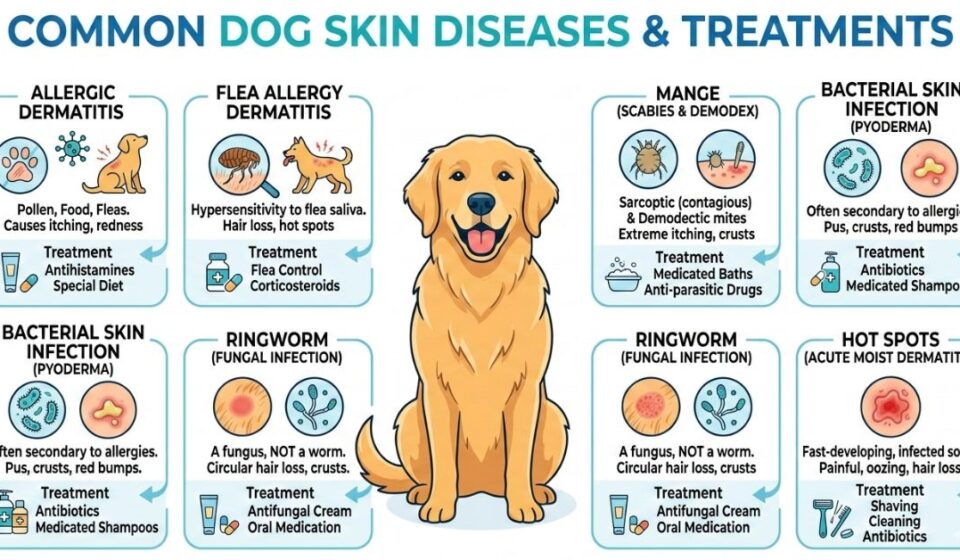

Skin health often reflects a dog’s overall well being. When persistent scratching, redness, or hair loss appears, it rarely signals a minor concern. Skin disorders remain one of the most frequent reasons for veterinary visits across the United States. From mild irritation to chronic inflammatory conditions, common dog skin diseases can significantly affect comfort, behavior, and long term health.
The canine skin barrier serves as a protective shield against bacteria, allergens, parasites, and environmental irritants. When that barrier weakens, infections and inflammatory responses develop quickly. Even a small patch of irritation can escalate into painful lesions if not addressed appropriately. Conditions such as hot spots in dogs, fungal infections dogs experience in humid climates, and allergic dermatitis are increasingly diagnosed in both urban and rural environments.
Effective management begins with knowledge. Recognizing early signs, identifying common triggers, and practicing consistent pet skin care can reduce recurrence and improve quality of life. This comprehensive guide examines the most common dog skin diseases, outlines general dog skin infection treatment approaches, and provides practical strategies to maintain healthy canine skin throughout every season.
Why Skin Disorders Are So Common in Dogs
Canine skin differs structurally from human skin. It is thinner, contains fewer cell layers, and is more sensitive to environmental shifts. Because of this vulnerability, exposure to allergens, parasites, and moisture can lead to rapid inflammation.
Several contributing factors explain the prevalence of common dog skin diseases:
Environmental Allergens
Pollen, mold spores, dust mites, and grass frequently trigger allergic responses. In warmer regions of the United States, prolonged pollen seasons intensify symptoms.
Parasites
Fleas remain a leading cause of allergic dermatitis. Even a single bite may trigger severe itching in sensitive dogs.
Humidity and Climate
Moisture creates an ideal environment for bacterial and fungal infections dogs commonly develop in areas with high humidity.
Genetics
Certain breeds such as Bulldogs, Retrievers, and Terriers are predisposed to chronic skin conditions due to inherited immune sensitivities.
Compromised Skin Barrier
Excessive bathing, poor nutrition, and harsh grooming products can weaken natural oils that protect the skin.
When multiple factors overlap, inflammation intensifies, making early recognition essential.
Signs That Signal Skin Trouble
Skin disease often begins subtly before progressing into more visible symptoms. Recognizing warning signs supports timely intervention.
Persistent Itching
Frequent scratching, chewing, or rubbing against surfaces is a primary indicator of irritation.
Redness and Inflammation
Inflamed patches often appear on the belly, paws, ears, and underarms.
Hair Loss
Localized or widespread hair thinning may accompany infection or allergic reactions.
Scabs and Crusting
Lesions that ooze or form crusts may signal bacterial involvement.
Odor
An unusual or strong odor often accompanies fungal infections dogs experience.
Behavioral changes such as irritability or restlessness frequently accompany discomfort.
Allergic Dermatitis
Allergic dermatitis ranks among the most common dog skin diseases in the United States. It develops when the immune system overreacts to environmental or dietary triggers.
Causes
Environmental Allergens
Grass, tree pollen, dust mites, and mold.
Flea Allergy
Flea saliva triggers intense itching even after minimal exposure.
Food Sensitivities
Certain proteins may provoke chronic inflammation.
Symptoms
Intense itching
Red inflamed skin
Recurring ear infections
Licking of paws
Hair thinning
General Management
Dog skin infection treatment in allergic cases focuses on reducing exposure to triggers and soothing inflammation. Regular bathing with gentle cleansers and maintaining clean bedding may support pet skin care. Environmental control such as vacuuming and limiting outdoor exposure during peak pollen seasons can reduce flare ups.
Bacterial Skin Infections
Bacterial infections often develop secondary to allergies or skin trauma. When scratching breaks the skin barrier, bacteria multiply rapidly.
Pyoderma
Pyoderma refers to a bacterial infection characterized by pustules and crusting lesions.
Common Signs
Red bumps
Pus filled lesions
Circular patches of hair loss
Crusting
Risk Factors
Excessive moisture
Untreated allergies
Poor grooming hygiene
General Care
Dog skin infection treatment may include cleansing affected areas and maintaining dryness. Early evaluation prevents spread. Consistent pet skin care routines help reduce recurrence.
Hot Spots in Dogs
Hot spots in dogs, medically known as acute moist dermatitis, develop quickly and can expand within hours.
Why They Occur
Excessive licking or scratching due to allergies, insect bites, or moisture causes localized trauma. Bacteria then colonize the area, intensifying inflammation.
Appearance
Moist red lesions
Painful swollen patches
Hair matted with discharge
Environmental Triggers
High humidity
Thick coats
Swimming without thorough drying
Preventive Care
Keeping coats dry and brushing regularly supports airflow. Prompt attention to minor irritations reduces the risk of hot spots in dogs escalating into severe lesions.
Fungal Infections in Dogs
Fungal infections dogs commonly encounter include yeast infections and ringworm.
Yeast Dermatitis
Yeast thrives in warm, moist areas such as ears and skin folds.
Symptoms
Greasy skin
Musty odor
Darkened thickened skin
Persistent itching
Ringworm
Despite its name, ringworm is a fungal infection affecting hair and skin.
Symptoms
Circular bald patches
Scaly skin
Mild itching
Risk Factors
Humidity
Compromised immunity
Shared grooming tools
Consistent pet skin care and clean grooming equipment reduce transmission risk.
Parasitic Skin Conditions
Parasites remain a significant contributor to common dog skin diseases.
Fleas
Flea allergy dermatitis can cause intense itching and secondary infections.
Mange
Mange results from mite infestation.
Sarcoptic Mange
Highly contagious and intensely itchy.
Demodectic Mange
Often linked to immune suppression.
Parasite prevention programs are essential in long term skin health management.
Dog Rashes Causes and Irritants
Dog rashes causes range from simple contact irritation to systemic conditions.
Contact Dermatitis
Exposure to chemicals, detergents, lawn treatments, or certain fabrics may provoke localized redness.
Heat Rash
Warm climates and limited airflow may cause irritation under thick coats.
Food Related Reactions
Some dogs experience rashes secondary to dietary sensitivities.
Careful observation of environmental changes often identifies triggers.
Seasonal Impact on Skin Health
Seasonal transitions significantly affect canine skin.
Spring and Summer
Increased pollen and flea activity raise the incidence of allergic reactions and hot spots in dogs.
Fall
Dry air may trigger flaking and itching.
Winter
Indoor heating lowers humidity, leading to dryness and irritation.
Adjusting grooming and hydration practices seasonally strengthens the skin barrier.
Nutrition and Skin Integrity
Diet plays a critical role in maintaining healthy skin.
Essential Fatty Acids
Omega fatty acids support skin barrier function and coat shine.
Protein Quality
High quality protein contributes to hair growth and tissue repair.
Hydration
Adequate water intake maintains skin elasticity.
Balanced nutrition remains foundational in preventing common dog skin diseases.
Grooming and Preventive Pet Skin Care
Routine grooming serves as both preventive care and early detection.
Brushing
Removes debris and distributes natural oils.
Bathing
Moderate frequency preserves protective oils.
Skin Inspection
Regular checks identify early redness or lesions.
Consistent pet skin care reduces infection risk and enhances comfort.
Overview of Common Dog Skin Diseases
| Condition | Primary Cause | Key Symptoms | Risk Factors | Preventive Measures |
|---|---|---|---|---|
| Allergic Dermatitis | Environmental or food triggers | Itching, redness, ear issues | Pollen exposure | Environmental control |
| Pyoderma | Bacterial infection | Pustules, crusting | Moisture, allergies | Hygiene maintenance |
| Hot Spots | Self trauma and bacteria | Moist painful lesions | Humidity | Dry coat care |
| Yeast Infection | Fungal overgrowth | Odor, thickened skin | Skin folds | Keep areas dry |
| Flea Dermatitis | Flea saliva allergy | Severe itching | Outdoor exposure | Flea prevention |
When Professional Evaluation Becomes Necessary
Persistent symptoms, spreading lesions, or behavioral distress warrant veterinary assessment. Chronic untreated inflammation may progress into systemic complications. Early intervention remains the most effective strategy in dog skin infection treatment.
Long Term Skin Health Strategy
Sustainable management of common dog skin diseases relies on consistency rather than reactive care.
Maintain Clean Living Spaces
Regular washing of bedding and vacuuming reduce allergen buildup.
Monitor Environmental Changes
New cleaning agents or lawn treatments may trigger rashes.
Support Immune Health
Balanced nutrition and stress reduction enhance resilience.
Observe Behavioral Patterns
Excessive licking often precedes visible lesions.
Comprehensive pet skin care requires vigilance and routine attention.
Final Thoughts on Canine Skin Health
Skin conditions remain among the most visible and distressing health challenges affecting dogs across the United States. Persistent itching, redness, and lesions not only compromise comfort but also reflect deeper imbalances within the immune system and environment. Common dog skin diseases such as allergic dermatitis, bacterial infections, and fungal infections dogs experience frequently require consistent observation and preventive action rather than reactive care.
A proactive approach centered on proper grooming, environmental awareness, balanced nutrition, and timely evaluation significantly reduces recurrence. Early recognition of dog rashes causes and prompt attention to hot spots in dogs prevent escalation into more complex infections. While dog skin infection treatment varies depending on underlying factors, sustained pet skin care habits remain the foundation of long term skin resilience.
Healthy skin supports more than appearance. It protects against pathogens, regulates temperature, and signals overall wellness. Through informed management and consistent preventive strategies, canine companions can maintain comfort, vitality, and quality of life throughout every stage of development.
Frequently Asked Questions
1. What are the most common dog skin diseases?
Allergic dermatitis, bacterial infections, hot spots in dogs, fungal infections dogs develop, and flea related dermatitis rank among the most prevalent.
2. What causes sudden itching in dogs?
Sudden itching often results from flea exposure, environmental allergens, or contact with irritants.
3. How can dog skin infection treatment be approached?
Treatment generally focuses on cleansing affected areas, reducing inflammation, and preventing moisture buildup. Professional evaluation determines specific therapy.
4. Are fungal infections dogs contagious?
Certain fungal conditions such as ringworm may spread between animals through direct contact.
5. Why do hot spots in dogs appear quickly?
Self trauma from scratching combined with moisture allows bacteria to multiply rapidly, causing fast lesion expansion.
6. What are common dog rashes causes?
Contact with chemicals, allergens, parasites, and dietary sensitivities frequently trigger rashes.
7. Can diet influence skin health?
Yes. Essential fatty acids and adequate protein intake contribute significantly to skin barrier integrity.
8. Do seasonal changes affect skin disease?
Yes. Pollen in spring and dry indoor air in winter commonly exacerbate symptoms.
9. How often should grooming occur?
Brushing several times per week and bathing as appropriate for coat type helps maintain pet skin care standards.
10. When should veterinary care be sought?
If lesions worsen, spread rapidly, or cause significant discomfort, professional evaluation is necessary.