
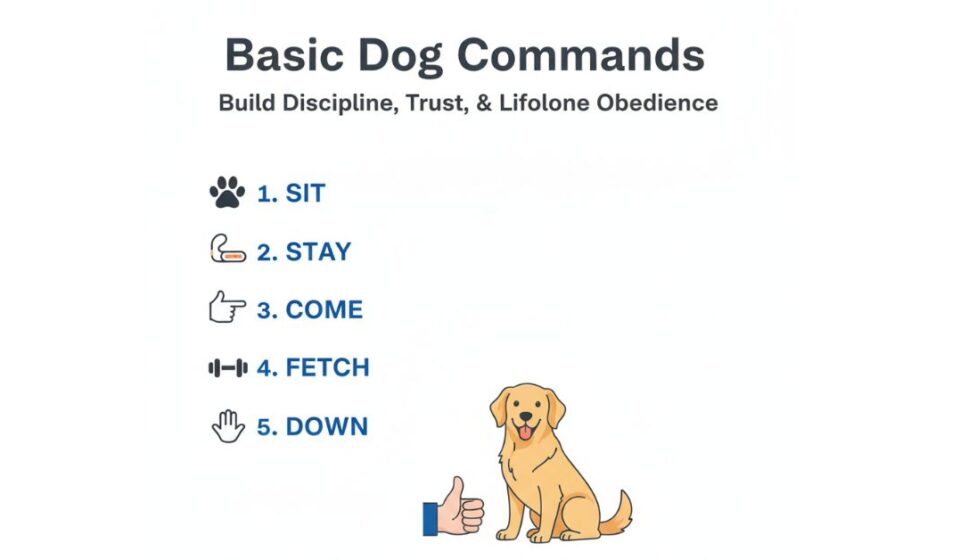

Bringing a dog into a home introduces energy, loyalty, and companionship that can reshape daily life. Yet beneath the joy of wagging tails and playful moments lies a fundamental need for structure. Dogs thrive on clarity, routine, and consistent communication. Without guidance, even the most affectionate companion may struggle with impulse control and behavior in unfamiliar settings. That is where a structured basic dog commands list becomes indispensable.
Professional trainers and behavioral specialists across the United States consistently emphasize that obedience training is not about dominance or control. It is about communication. When a dog clearly understands expectations, anxiety decreases and confidence increases. According to data from the American Veterinary Medical Association, structured training reduces behavioral surrender rates in shelters. Early beginner obedience training significantly improves long term behavior outcomes, reinforcing the importance of foundational commands.
A well designed sit stay command training routine or recall training dog protocol does more than teach compliance. It builds mutual respect between handler and companion. When training sessions are rooted in positive reinforcement and consistency, dogs develop trust in their environment. That trust becomes the bedrock of reliable obedience, both at home and in public spaces.
The following comprehensive guide presents a strategic, psychology driven approach to the essential basic dog commands list. Each section explains why the command matters, how it shapes behavior, and how to teach dog commands fast without sacrificing quality or reliability.
Why Foundational Commands Matter
Behavioral Structure and Mental Stimulation
Dogs are intelligent, social animals. Mental engagement through structured training reduces boredom related behaviors such as chewing, excessive barking, and jumping. Beginner obedience training stimulates cognitive processing and strengthens neural pathways associated with focus and impulse control.
Training also satisfies a dog’s innate desire for guidance. In the absence of clear leadership, dogs may create their own rules. That often results in inconsistent behavior. A structured basic dog commands list provides predictable expectations that stabilize behavior across environments.
Safety and Risk Reduction
Reliable obedience directly impacts safety. A strong recall training dog routine can prevent traffic accidents, wildlife encounters, and conflicts with other animals. Commands such as stay and leave it reduce the likelihood of ingesting harmful substances or running into dangerous areas.
Behavioral experts affiliated with the American Kennel Club consistently rank recall as one of the most life saving commands. When executed correctly, it allows immediate interruption of unsafe actions.
Strengthening the Human Dog Bond
Obedience training creates a language shared between handler and companion. Each successful repetition reinforces trust. Dogs gain confidence through clarity. Handlers gain reassurance through predictability. Over time, this shared structure strengthens emotional connection and reliability.
The Core Basic Dog Commands List
The following table outlines the foundational commands essential for structured obedience development.
| Command | Purpose | Primary Benefit | Training Complexity |
|---|---|---|---|
| Sit | Establish control and focus | Impulse regulation | Low |
| Stay | Promote self control | Safety and stability | Moderate |
| Come | Recall training dog | Emergency response | Moderate |
| Down | Calm behavior | Relaxation cue | Low |
| Leave It | Prevent unsafe behavior | Safety control | Moderate |
| Heel | Controlled walking | Public behavior | Moderate |
| Place | Boundary training | Environmental control | Moderate |
| Wait | Pause before action | Patience building | Low |
| Drop It | Release objects | Safety | Moderate |
| Look | Gain attention | Focus redirection | Low |
Each command serves a psychological and practical function. Together, they form a complete basic dog commands list that supports lifelong obedience.
Sit Command: The Foundation of Control
Why Sit Is Essential
The sit stay command training sequence begins with sit. This command establishes immediate focus and impulse regulation. A dog that can sit reliably is less likely to jump on guests or react impulsively.
Sit also serves as a reset behavior. Trainers frequently use it to interrupt unwanted actions and redirect attention.
How to Teach Dog Commands Fast Using Sit
Begin in a low distraction environment. Hold a treat close to the nose and gradually lift it upward. As the head follows the motion, the rear naturally lowers. The moment the dog sits, provide verbal praise and a reward.
Consistency is critical. Short sessions of five to ten minutes, repeated multiple times daily, accelerate retention. Reinforcement timing must be immediate to strengthen association.
Stay Command: Developing Self Control
The Psychology Behind Stay
Stay teaches delayed gratification. Impulse control develops gradually in dogs, particularly in puppies. Structured sit stay command training strengthens patience and builds emotional regulation.
This command directly impacts safety. It prevents darting through doors, running toward distractions, or chasing moving objects.
Step by Step Stay Training
- Begin with the dog in a seated position.
- Use a clear verbal cue while holding an open palm.
- Step back one pace.
- Return immediately and reward if the dog remains still.
Distance and duration should increase gradually. Overextension too early often results in confusion and broken commands.
Recall Training Dog: The Life Saving Command
Why Recall Is Non Negotiable
Recall training dog techniques are vital for safety. According to guidance from the American Society for the Prevention of Cruelty to Animals, reliable recall prevents accidents and strengthens off leash control.
Dogs respond to recall based on trust and reinforcement history. If returning results in negative consequences, reliability diminishes.
Building a Strong Recall Response
Use an enthusiastic tone. Begin indoors with minimal distractions. Call the dog by name followed by the recall cue. Reward generously upon return. High value treats significantly improve recall speed and consistency.
Gradually increase environmental distractions. Parks, sidewalks, and fenced areas offer progressive challenge levels.
Down Command: Encouraging Calm Behavior
The down command promotes relaxation and submissive body positioning. It is especially effective for excitable dogs. In beginner obedience training, down often follows mastery of sit.
Lure the dog from a seated position by guiding a treat downward between the front paws. Reinforce immediately once the elbows touch the ground.
Down becomes particularly valuable in public settings such as outdoor dining spaces or waiting areas.
Leave It and Drop It: Impulse Management
Leave It
Leave it prevents engagement with undesirable objects. Whether encountering food scraps, wildlife, or household hazards, this command protects health and safety.
Place a treat in a closed hand. When the dog attempts to access it, withhold reinforcement. The moment disengagement occurs, reward with a different treat.
Drop It
Drop it addresses possession behaviors. Teach by offering a toy, then presenting a reward in exchange. The release should be immediate and positive.
These impulse control commands are advanced components of the basic dog commands list and should be reinforced consistently.
Heel and Loose Leash Walking
Heel establishes structured walking behavior. Dogs naturally walk faster than humans. Without guidance, pulling becomes habitual.
Begin in distraction free environments. Reward proximity and eye contact. Short sessions improve learning retention.
Loose leash walking directly reflects training consistency. It also significantly enhances public behavior compliance.
Place and Boundary Training
Place instructs a dog to move to a designated area and remain there. This command enhances environmental management. It is particularly effective during guest visits or meal preparation.
Use a mat or raised platform. Guide the dog onto the surface and reward immediately. Gradually increase duration.
Boundary training improves spatial awareness and reduces overstimulation.
Beginner Obedience Training Strategy
Consistency Over Duration
Research in canine cognition indicates that frequent short sessions outperform infrequent long sessions. Five minute structured repetitions reinforce memory consolidation.
Reinforcement Hierarchy
Positive reinforcement remains the gold standard in modern obedience methods. Avoid inconsistent discipline. Clear, calm communication supports better retention.
Timing and Tone
Immediate feedback is essential. Dogs associate reward within seconds of behavior execution. Tone should remain neutral yet encouraging.
Teach Dog Commands Fast Without Sacrificing Quality
Rapid learning depends on three principles:
- Clarity of cue
- Consistency of repetition
- Appropriate reinforcement
Avoid introducing multiple commands simultaneously. Mastery of one skill before progression strengthens reliability.
Incorporating mild distractions gradually ensures generalization across environments.
Common Training Mistakes
Inconsistency
Different household members using varying cues leads to confusion. Uniform language is essential.
Overcorrection
Harsh responses damage trust and reduce enthusiasm. Training must remain structured yet positive.
Advancing Too Quickly
Progression without mastery creates unreliable performance. Incremental increases in difficulty preserve confidence.
Advanced Applications of Basic Commands
Basic commands form the framework for advanced obedience, agility, and service work. Organizations such as the American Kennel Club emphasize that competition level obedience begins with flawless foundational skills.
Reliable sit stay command training transitions into longer duration holds. Strong recall training dog routines evolve into off leash reliability in complex environments.
These advanced outcomes depend entirely on disciplined foundational training.
Long Term Maintenance
Obedience is not a one time event. Regular reinforcement sessions preserve reliability. Short weekly refreshers prevent regression.
Environmental changes, aging, and lifestyle shifts may require periodic retraining. Dogs learn continuously. Structured guidance should evolve alongside developmental stages.
Closing Perspective
Structured obedience training transforms a household companion into a confident, reliable partner. The basic dog commands list represents far more than a checklist of cues. It establishes communication, reinforces emotional stability, and enhances safety in everyday life. When sit stay command training is consistent and recall training dog routines are prioritized, behavior shifts from reactive to deliberate.
Beginner obedience training lays the foundation for advanced capabilities and lifelong companionship. Reliable behavior does not emerge by chance. It develops through repetition, clarity, and trust. With patience and structured reinforcement, dogs internalize expectations and respond with enthusiasm rather than hesitation.
Long term obedience success rests on disciplined consistency. Commands practiced daily evolve into instinctive responses. Over time, structured training builds a relationship defined by mutual respect and dependable communication. The result is not merely compliance but a stable, confident dog capable of navigating diverse environments with composure.
Frequently Asked Questions
1. At what age should beginner obedience training begin
Training can begin as early as eight weeks of age using simple cues and positive reinforcement.
2. How long does it take to complete a basic dog commands list
Most dogs grasp foundational commands within four to eight weeks with consistent daily practice.
3. Is recall training dog suitable for all breeds
Yes. While certain breeds may require additional repetition, recall is essential for every dog.
4. How many commands should be introduced at once
One new command at a time ensures clarity and retention.
5. What is the most important command
Recall is widely regarded as the most critical for safety.
6. Can older dogs learn new commands
Yes. Neuroplasticity allows learning at any age with structured repetition.
7. How often should sit stay command training be practiced
Daily short sessions produce optimal results.
8. Should treats always be used
Treats are highly effective initially. Gradual transition to intermittent reinforcement strengthens long term reliability.
9. Why does a dog respond at home but not outside
Environmental distractions reduce focus. Gradual exposure training improves consistency.
10. What is the biggest factor in obedience success
Consistency across handlers and environments determines long term reliability.